American beauty has quietly redefined its priorities somewhere amid the serum samples and cream cleansers. It now desires glass skin, targeted ampoules, and a simplified ten-step routine condensed into three essential products and a clear strategy. Modern shoppers want what Seoul has spent decades refining, and they want immediate access.
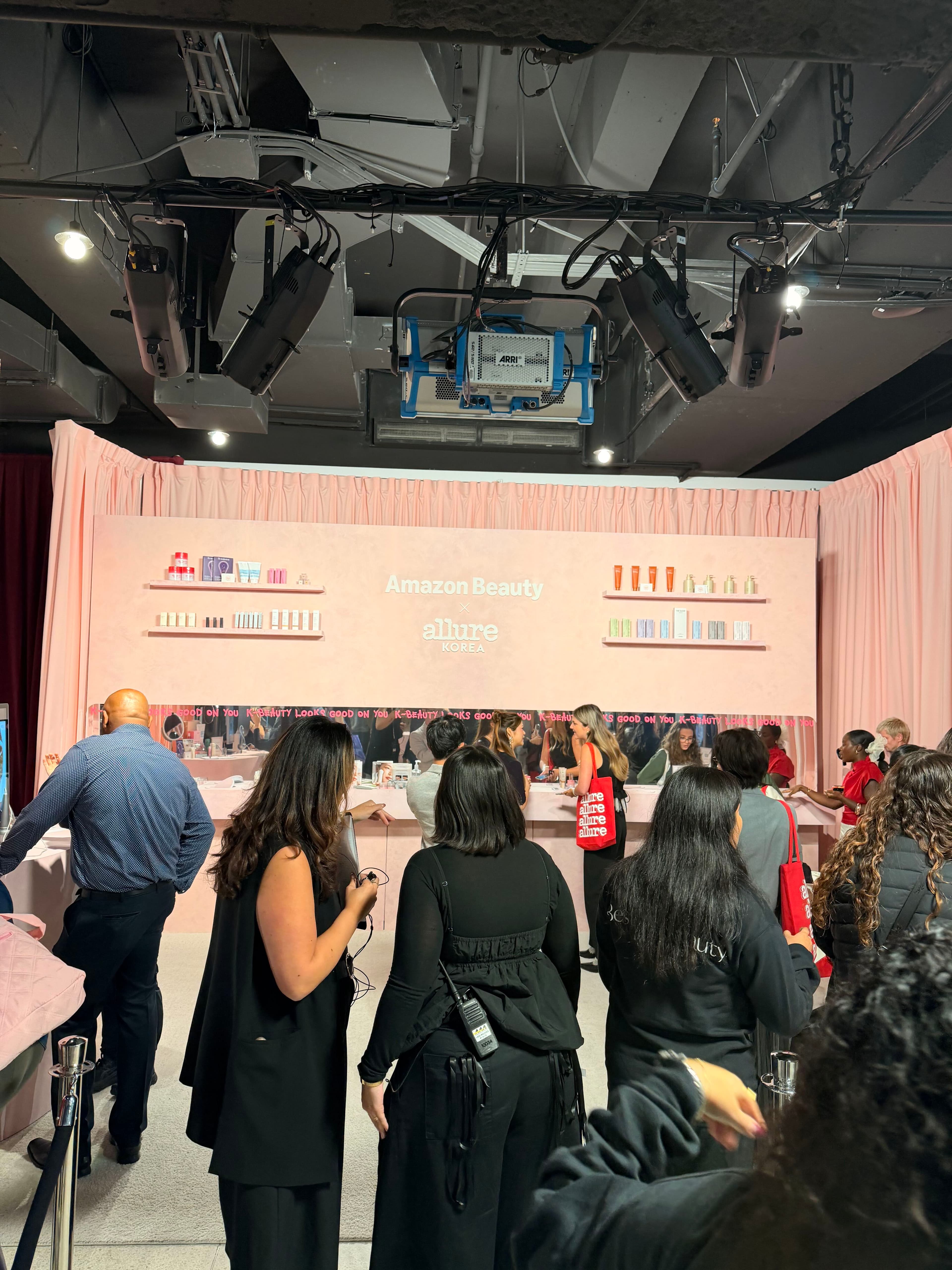
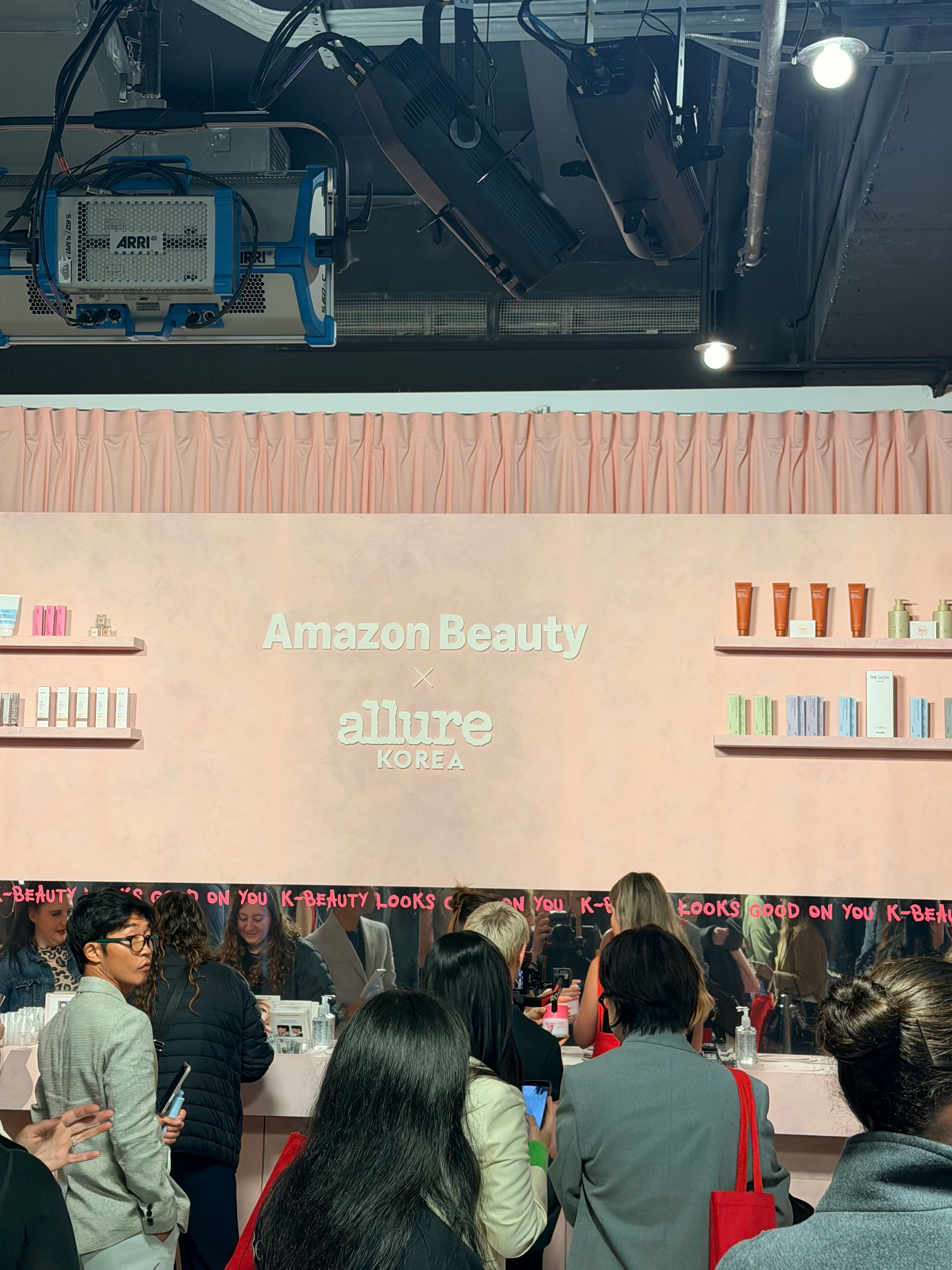
That appetite was on full display this weekend at Allure’s Best of Beauty event in New York, where the Amazon Beauty x Allure Korea space drew a crowd that never thinned. Pink drapes framed a mirrored counter, and a line of hot pink script ran across the glass: K-beauty looks good on you. Shoppers leaned in over shelves of Korean creams, serums and devices, phones raised, comparing notes and reading labels like they were studying for something. The experience was among the most crowded of the entire event, and by 11 a.m. its appointments were booked through the evening.
The numbers say the room was no fluke. Korean facial skincare sales on Amazon reached $818 million in the first half of 2026, up 80% year over year, roughly three times the growth of Amazon’s overall facial skincare category. K-beauty has moved from the trend column to the core of how America shops for skin.
The booth’s premise fit on one acrylic card in four steps. Get scanned. See your results. Find your match. Shop your routine.
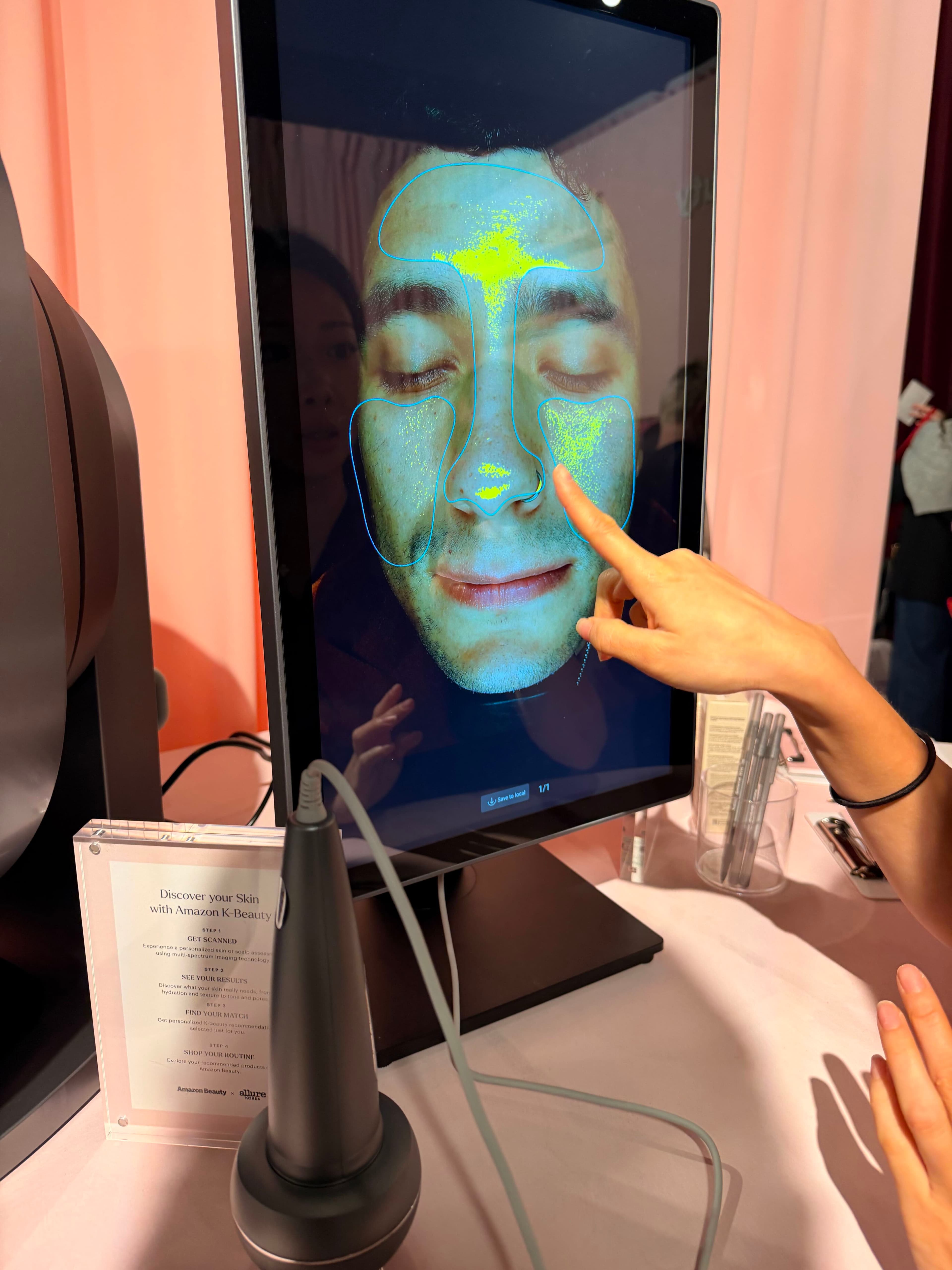
Neon yellow clusters bloomed across the forehead, the bridge of the nose and both cheeks, each one a data point about oil, pores or pigment that a mirror would never admit to.
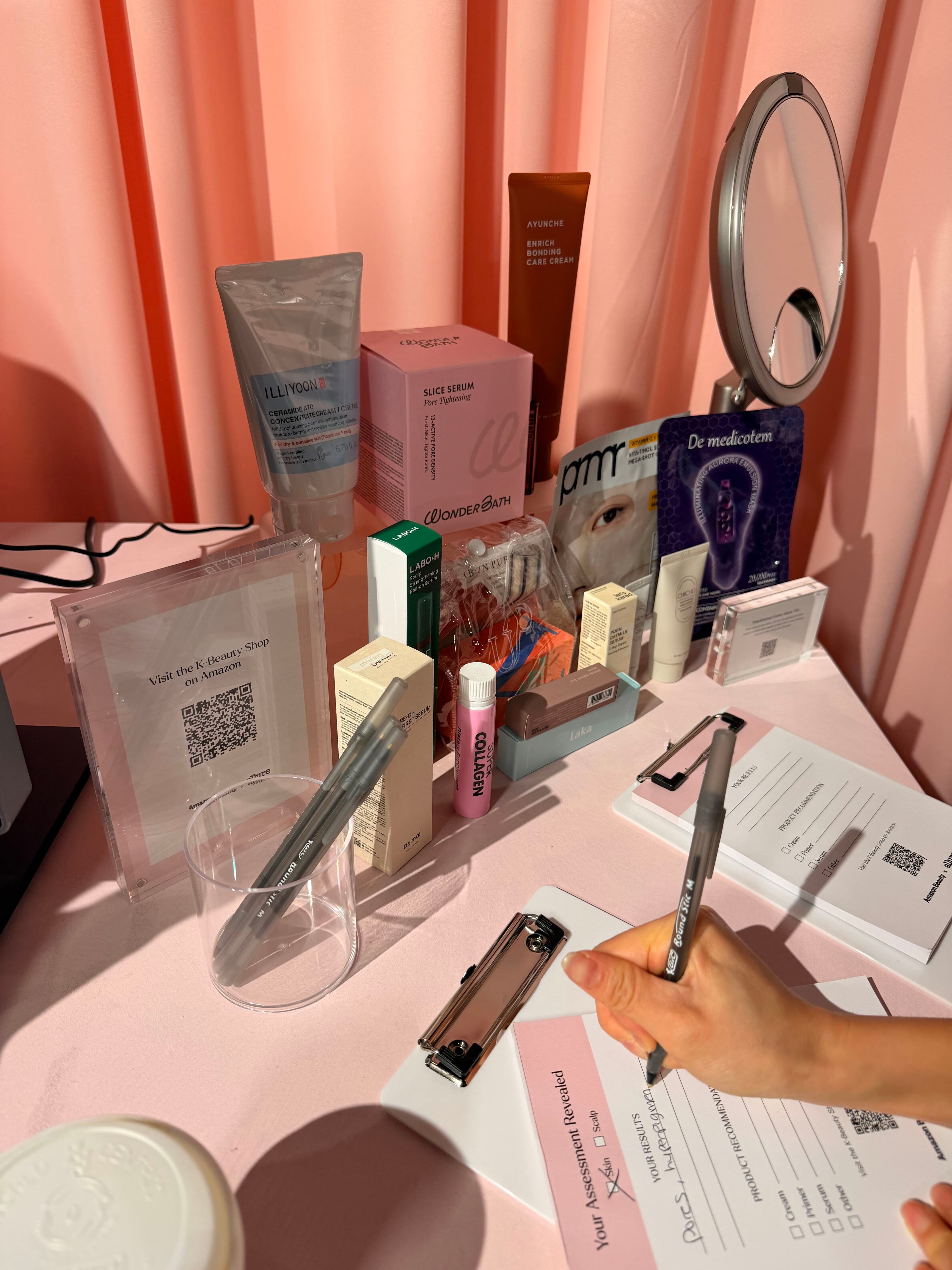
A specialist read the results and cut through the noise. Then, they recommended three products, and handed them over to take home.
The scan
Step one took place in front of a vertical screen and a multispectrum imager. Eyes closed, face forward, and a few moments later the machine had an opinion about everything. Neon yellow clusters bloomed across the forehead, the bridge of the nose and both cheeks, each one a data point about oil, pores or pigment that a mirror would never admit to.
The full report arrived as a grid of levels, one through four. Skin age: 21. The machine was flattering on that count and unsparing on the rest. Deep sensitivity, dark spots and the pigmentation heat map all landed in Level IV, the top tier of concern. Deep sebum, porphyrins, deep pigment and collagen sat in Level III. Acne, blackheads and wrinkles barely registered.
A specialist read the results and cut through the noise. Pores and hyperpigmentation went on the assessment sheet, and the rest became background. Then came the part that made the line worth standing in: three recommended products, handed over to take home.
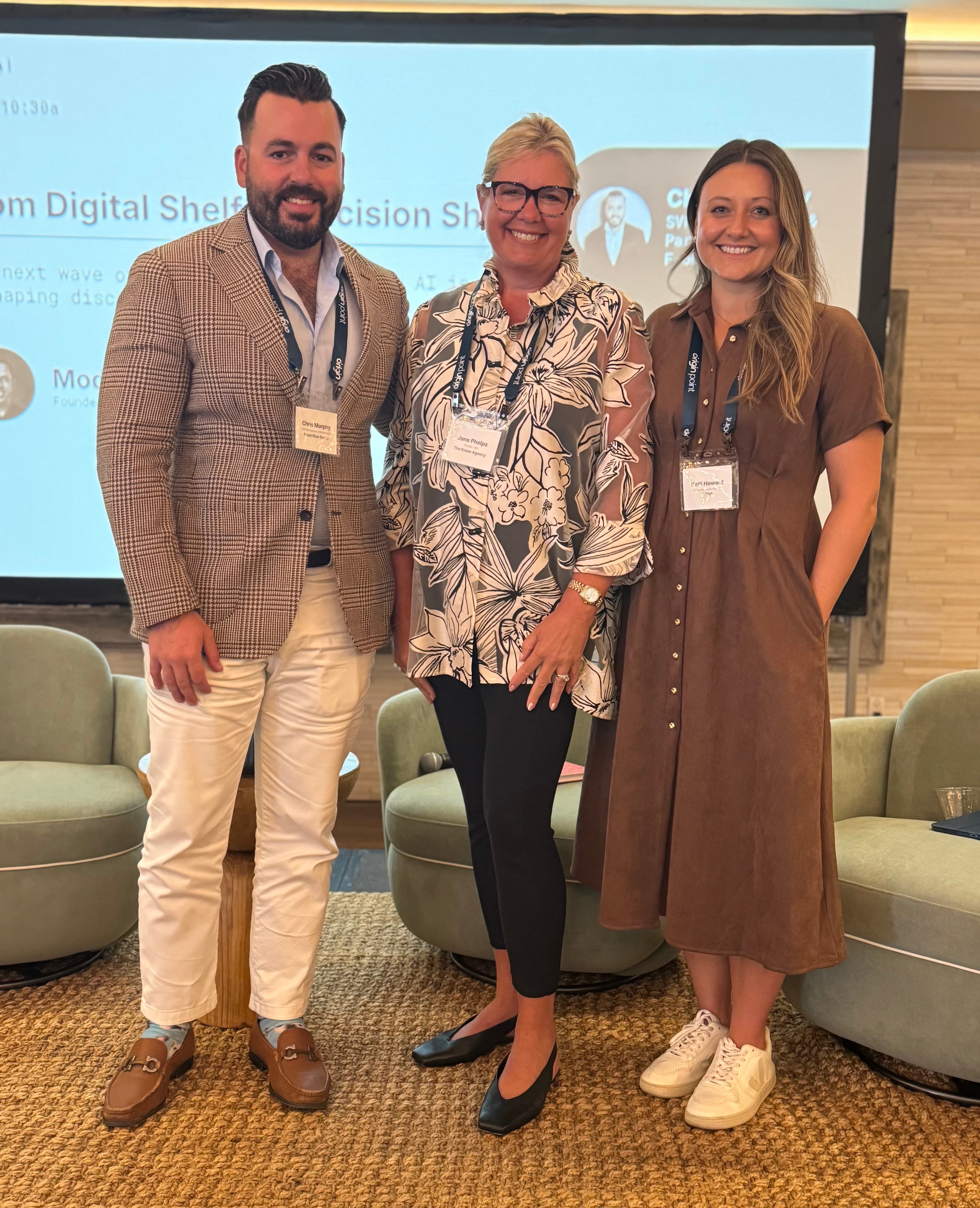
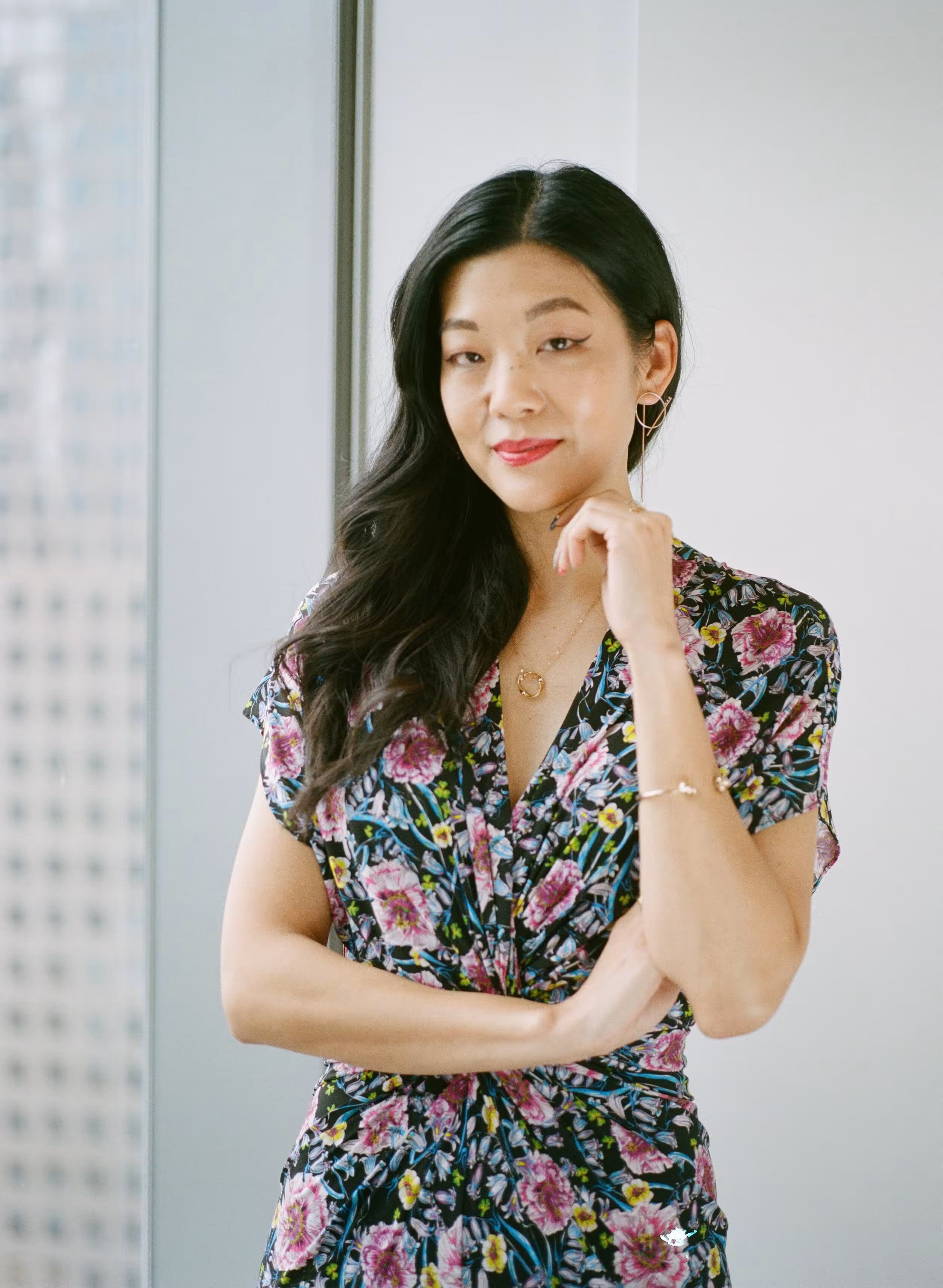
“As someone who ran Best of Beauty for many years, this event felt like the convergence of my entire career,” says Michelle Lee, Chief Brand Officer at Front Row and former Editor in Chief of Allure. “I always love catching up with my beauty industry friends. And it was wonderful to see K-Beauty represented in such a major way this year, which really signals its growing presence in the global industry. I've been covering and working with Korean beauty brands for more than a decade—so it's been exciting to be part of the category’s tremendous growth.”
Diagnosis first, then the shelf
That sequence is the K-beauty method in miniature. Korean skincare has long started with the skin and worked outward, treating routine as a response to evidence. The booth put that philosophy in a form a stranger could try in minutes, and a few hundred strangers did.
Around the counter, the shelves held the rest of the argument. Ceramide creams from Illiyoon. Pore-tightening serums from Wonder Bath. Devices and ampoules from THOME. Laka’s color. Labo-H’s scalp serums. Each brand sits on a path that Korean companies are racing to walk: from a loyal home market to American shoppers who now ask for K-beauty by name.
The last step is a listing
Look again at step four, shop your routine. The acrylic cards carried a QR code pointing to the K-beauty shop on Amazon. A journey that began with imaging technology and a specialist ended at a product detail page.
For a Korean brand entering the U.S., that detail page is the product. It holds the title, the claims, the images, the price and the reviews, and shoppers decide there. [Korean facial skincare sales on Amazon reached $818 million in the first half of 2026, up 80% year over year, roughly triple the growth of Amazon’s overall facial skincare category.] The demand is arriving. The open question is whether a brand is ready for it when it lands.
Readiness is where many Korean brands stall. Resellers list products and set prices before the brand has a plan. Content written for Seoul shoppers meets American shoppers who look for different claims and different proof. Discovery depends on retail media, search and AI recommendations that reward whoever set them up early.
Where Front Row fits
This is the work Front Row does. The agency manages more than $5 billion in global marketplace GMV across 250 brands, and its Amazon and TikTok Shop playbooks cover the journey from early launch to category leadership: control of listings and pricing, content native to U.S. consumers, and demand generation that makes a brand findable. Catapult, Front Row’s proprietary business intelligence platform, keeps every decision tied to live performance data.
Now that expertise has a Seoul address. Front Row’s new Korea office, led by SVP Korea Jinny Kim, gives Korean beauty, health and wellness and pharmacy brands a local partner who speaks both the language and the commercial rhythm of U.S. marketplaces.
“As Front Row continues to grow its operations in Seoul, we're thrilled to help more K-Beauty brands scale here in the U.S. and in Europe,”Michelle said.
On Saturday, hundreds of shoppers learned what their skin needed in the time it takes to close their eyes. Korean brands are already running that diagnosis on the U.S. market. Front Row helps them act on it.
Are you a K-beauty brand looking to expand on Amazon U.S.? Front Row is the partner to reach your international goals. Connect with our team below!