
Over the coming weeks, many companies will start planning for 2027, and almost every one of those meetings eventually lands on the same question: how much should the brand grow on Amazon? In a three-part series, we are sharing the method we use to answer that question with brands, as a planning aid you can work through with your own numbers.
This first part lays the foundation. Anyone who wants to plan a growth target first needs to know which sources their revenue comes from and who moves each of them.
The number is set before anyone asks where it comes from
Most planning meetings start with a number. The brand wants to grow by 15, 20 or 30% in 2027, and a large share of that is supposed to happen on Amazon. The justification usually comes from a look at the category: if it grew, the brand should keep pace, and if it shrank, the plan becomes more cautious.
What almost always goes missing is the question of where the desired growth is supposed to come from. Without that answer, nobody can say whether a target is realistic or what budget it needs. The answer starts with a simple split of revenue.
Branded, non-branded organic and non-branded paid
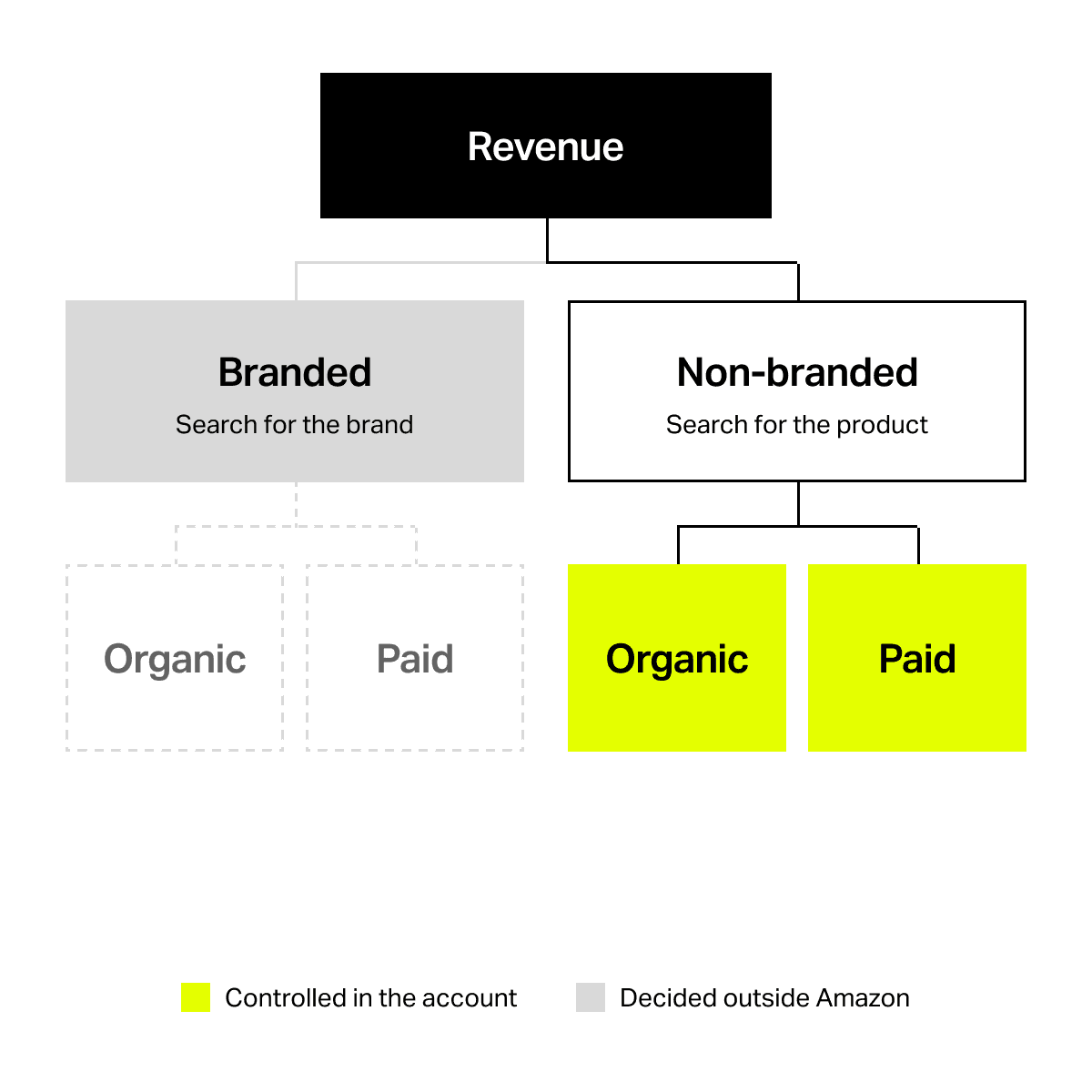
For planning purposes, we assign every euro of Amazon revenue to one of two sources. Branded sales happen when someone searches specifically for your brand and then buys. Non-branded sales happen when someone searches for a product, for example "Thermobecher Edelstahl" (stainless steel travel mug), and comes across your listing along the way. We also count every sale that comes from ads on other brands' product pages (product targeting) as non-branded. On top of that, some purchases happen without any search at all, for example when someone lands directly on a product page through an external link and buys there. We deliberately leave those paths out of this series to keep things simple and work with branded and non-branded only.
Non-branded sales split once more. Part of them come through paid ads (non-branded paid), the rest through the regular placement in search results (non-branded organic). The same split into organic and paid exists for branded sales as well. For planning, we only look at it in detail on the non-branded side, because that is where the account has the most leverage. Non-branded also does not automatically mean a new customer. Someone who has bought from you before and searches for "Thermobecher 500 ml" again next time also ends up here.
The result is a revenue tree with three branches. Every plan we build with brands starts with this split, because each branch is driven by different forces.
Who moves which branch
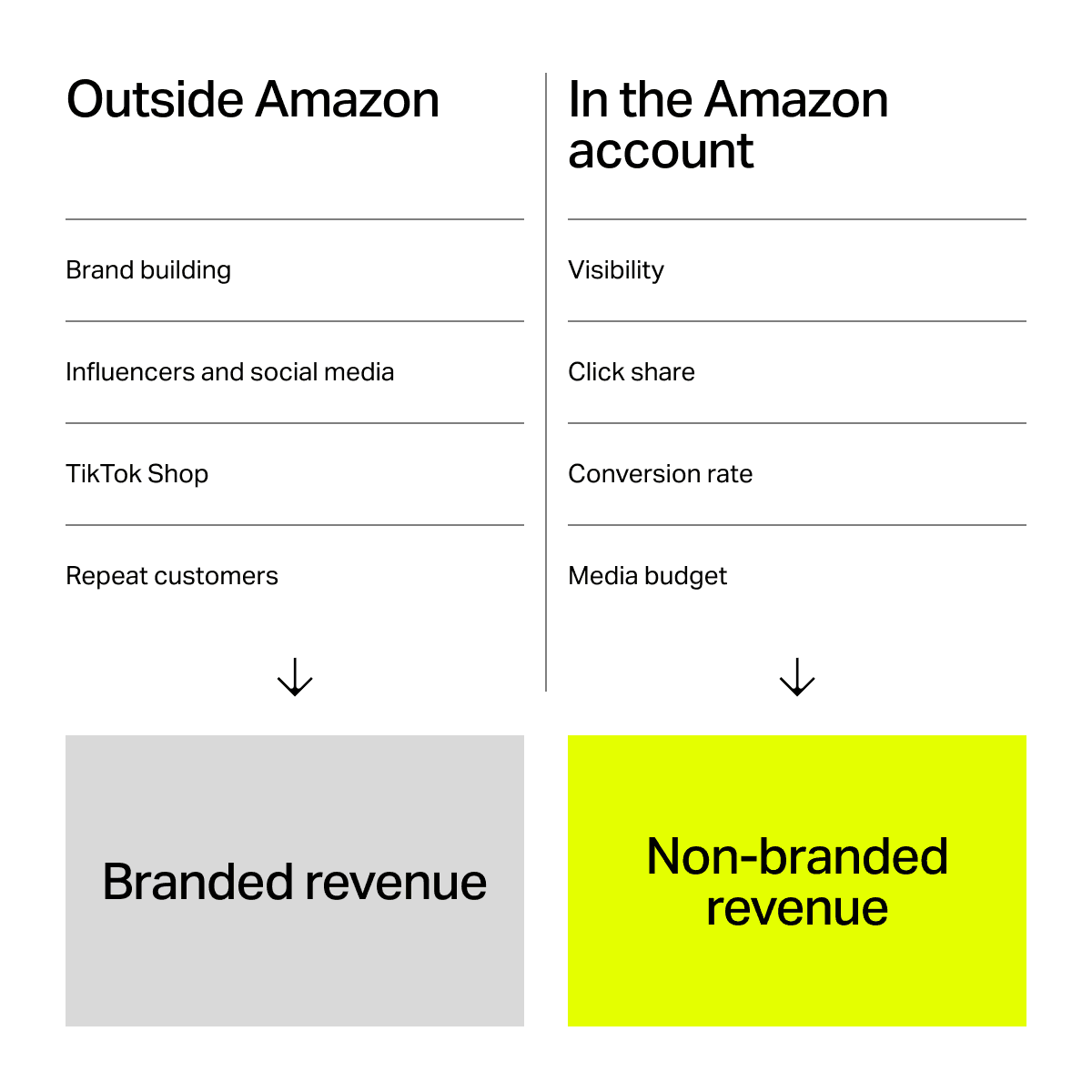
Branded revenue is mostly created outside the Amazon account. It comes from brand building, influencer campaigns, awareness campaigns at the top of the funnel, TikTok Shop and satisfied repeat customers who search for the brand by name the second time around. At that moment, Amazon is the place where a purchase intent gets fulfilled that was created somewhere else. Formats such as DSP or Prime Video Ads do contribute to brand awareness. For classic account management, which works at the bottom of the funnel, branded revenue remains only partly within reach.
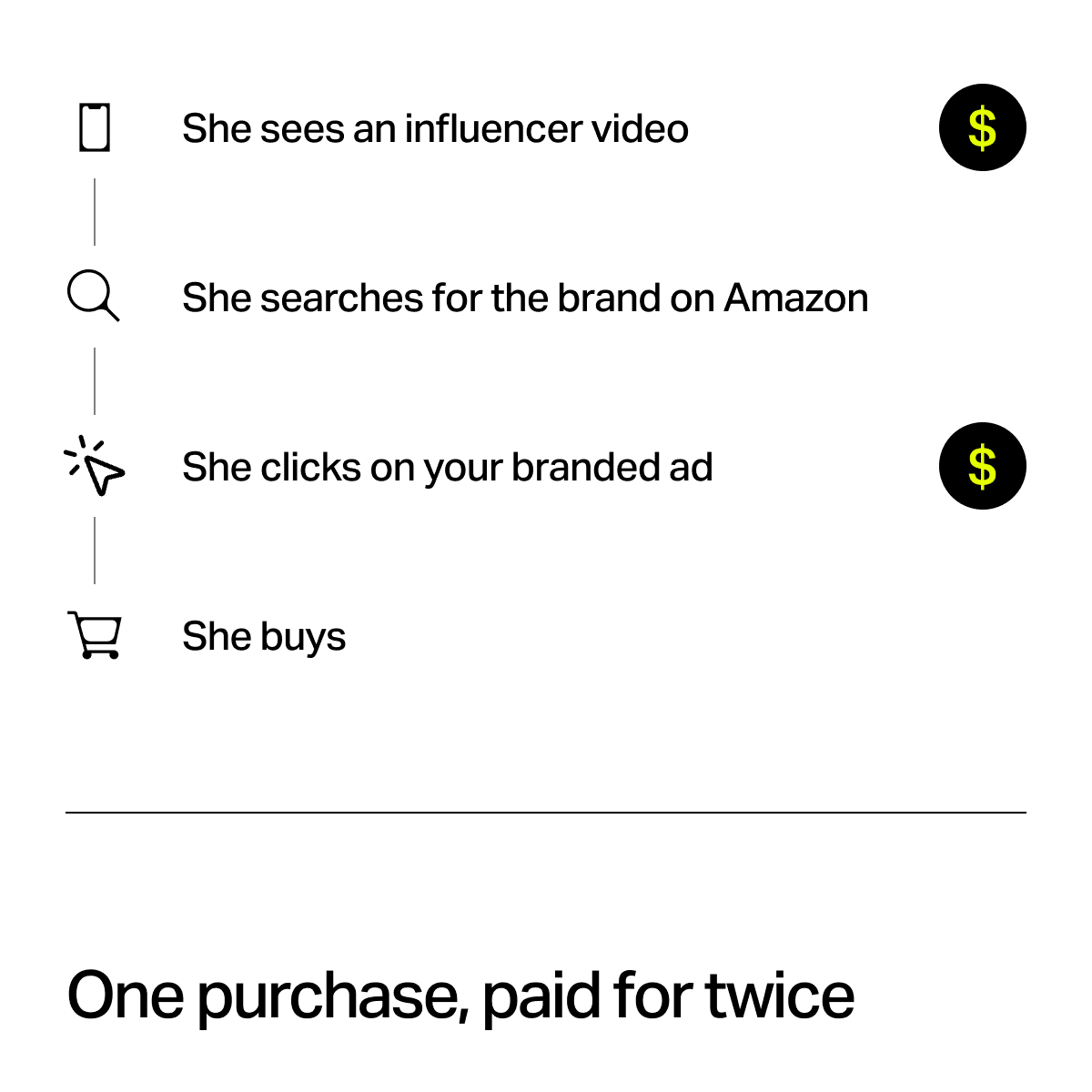
There is one more point that many reports leave out. A customer who searches for your brand has usually been paid for once already, through the marketing that made her aware of the brand. If she then comes in through a branded campaign on Amazon, you pay a second time for the same purchase. Branded campaigns can still make sense, for example to keep competitors off your own brand terms. Every assessment should still ask how much growth the Amazon account really creates on its own.
Non-branded revenue is where account management has the most influence. Visibility, click share, conversion rate and media budget decide how many purchases you win here.
Checkout or growth channel
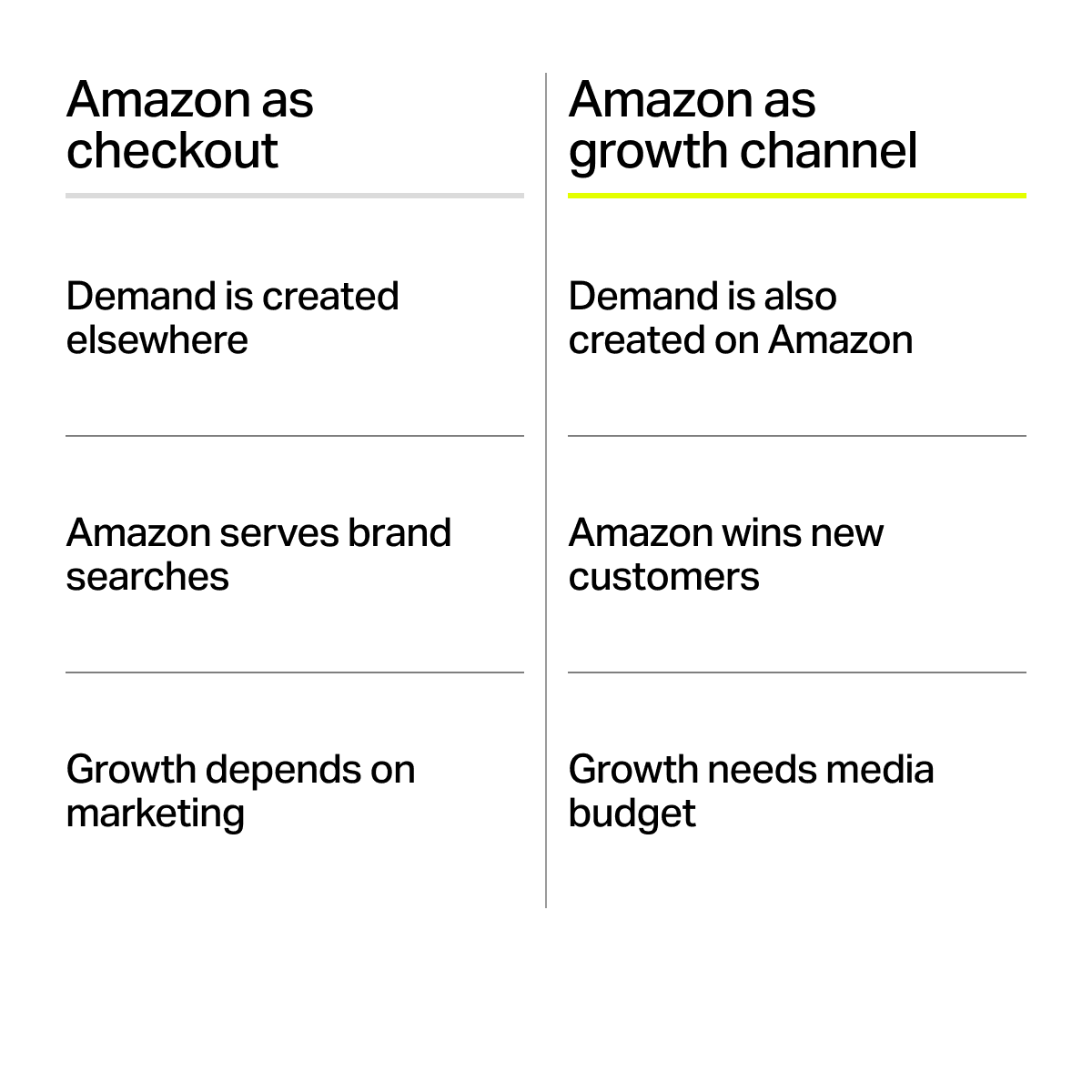
How big this field is for your plan depends on the role Amazon plays for your brand. Some brands create almost all of their demand elsewhere, through their own channels, retail and social media. Amazon then mainly serves brand searches and becomes the checkout, and growth depends almost entirely on marketing. Other brands use Amazon deliberately to reach people through generic search terms who do not know the brand yet (new-to-brand customers). In that case the account has to deliver a substantial share of the growth itself, and that takes budget.
The formula behind every euro
The entire planning approach in this series rests on a chain of three equations:
Revenue = units sold × average selling price
Units sold = clicks × conversion rate
Clicks = search volume × click share
In everyday terms: of all the people searching for something, some click on your product. Some of those who click go on to buy. Every purchase brings in the selling price. The conversion rate is the share of clicks that lead to a purchase, and the average selling price is what the industry calls ASP.
This chain gives you the levers for growth. More people search, a larger share of them click on your product, or a larger share of those who click go on to buy. Growth through a higher price is possible in theory as well, but we deliberately leave that case out of this series, because it has little to do with planning demand.
The formula applies to each of the three branches. The difference lies in who controls the levers. For branded, marketing mainly determines search volume. For non-branded, the market determines search volume, and the account determines how much of it you win.
Where the split reaches its limits
On Amazon, the line between paid and organic revenue is blurred. Some purchases through ads would have happened organically anyway, especially with branded campaigns. Assigning search terms to branded and non-branded also takes care, because searches that combine a product term with your brand name easily end up in the wrong branch. For annual planning, a clean approximation is enough, as long as it follows the same rules every year so that the numbers stay comparable.
What you can do this week
Split your Amazon revenue for the past twelve months into the three branches and write down who in your company moves each one. That overview alone changes the conversation in the planning meeting, because it shows how much of the growth target is not decided in the Amazon account at all.
In part two, we use the travel mug category to show why category growth is a misleading benchmark for your targets and how to read it properly with Amazon's own data.