
CONNECTED DEMAND TAKES CENTER STAGE AT WWD LA BEAUTY FORUM
At this year’s WWD LA Beauty Forum, Front Row took the stage to challenge one of the most persistent assumptions in modern commerce: that Amazon performance can be optimized in isolation.
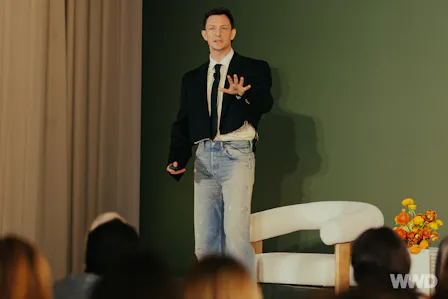
Presented by Christopher Skinner (Co-Founder & CRO), Katelyn Winker (VP, Digital Growth), and Alexandra Carmody (SVP, Marketplace Commercial Operations), the session—“How Connected Demand Drives Amazon Outperformance”—offered a clear, systems-level perspective on how today’s beauty brands actually grow.
As highlighted at WWD’s Los Angeles Beauty Forum, brands are no longer operating in a linear commerce environment. Instead, discovery, influence, and conversion are happening simultaneously across platform, which is reshaping how Amazon fits into the broader ecosystem.
The core message was direct: Amazon is no longer the starting point of the customer journey. It’s the conversion engine.

One Journey, Multiple Touchpoints
Today’s consumer doesn’t shop in a straight line. They discover a product through a creator on TikTok, validate it through Amazon reviews, experience it in-store at Sephora, and ultimately purchase wherever it’s most convenient. It’s one continuous journey, just fragmented across platforms.
Front Row emphasized that brands still operating channel-by-channel are losing momentum at every transition point. The data reinforces this shift: while 73% of shoppers discover products on social, only 10% actually purchase there. Many instead move to marketplaces like Amazon to convert.
The implication is clear: growth doesn’t come from optimizing individual channels. It comes from connecting them.
As Front Row’s Chief Growth Officer Chris Skinner noted during the panel, brands are seeing “fewer clean conversion paths,” as consumers move fluidly between social platforms, marketplaces, and owned channels before making a purchase decision.
Amazon Rewards What Happens Off Amazon
One of the most resonant themes from the session was that Amazon’s algorithm doesn’t just measure on-platform performance, it reflects off-platform demand. Skinner also emphasized that while Amazon remains a critical conversion engine, much of the influence driving those conversions now happens off-platform, making it harder for brands to attribute performance using traditional marketplace metrics alone.
Nearly 60% of product searches may begin on Amazon, but the intent that drives those searches is formed elsewhere.
Front Row’s perspective reframes Amazon as a downstream environment, where discovery, trust, and intent—built across social, creators, retail, and search—ultimately convert. Brands that rely solely on Amazon media and optimization strategies are operating with cold traffic, limiting both efficiency and scale.
Instead, the team outlined a connected demand model: build momentum upstream, then capture and convert it on-platform.

Discovery Is Everywhere And It’s Changing Fast
The panel highlighted how discovery has decentralized across multiple environments:
- Social platforms and creator ecosystems now act as primary awareness drivers
- Physical retail increasingly serves as a validation step
- AI and search platforms are reshaping how consumers ask and answer product questions
WWD highlighted that TikTok in particular is accelerating this shift, with search behavior increasingly happening on-platform. For many younger consumers, discovery now starts with creators rather than traditional search engines.
This shift requires a different approach to creative and media. Content must be native to each platform (not repurposed) and tested continuously. Front Row described creator ecosystems not as a marketing tactic, but as infrastructure: a scalable engine for both discovery and validation.
Amazon’s Premium Beauty segment saw significant growth in 2024, signaling that even as discovery fragments, high-intent conversion on Amazon continues to strengthen, particularly for brands that invest in both on- and off-platform strategies.

“Creators are not the only thing that is driving demand. TikTok search has become a discovery tool for brands."

Trust Is the New Conversion Lever
As discovery expands, so does scrutiny. Consumers are more informed, more skeptical, and more reliant on proof.
The session introduced what Front Row calls the “proof economy,” where conversion is driven by a combination of reviews, clinical claims, creator endorsements, awards, and certifications.
In this environment, content becomes “trust infrastructure.” Every asset, whether on a product detail page or in a social feed, must reinforce credibility.
This is especially critical on Amazon, where conversion is directly tied to signals like review density, fulfillment reliability, and pricing consistency. Gaps in any of these areas create friction that no amount of media spend can overcome.
As discussed on stage, trust is increasingly built before the point of purchase through creators, reviews, and community validation, rather than solely on the product detail page.
AI Is Reshaping the Funnel
Another emerging theme: the role of AI in compressing and redefining the purchase journey.
Consumers are increasingly turning to AI tools for product recommendations, with a growing number trusting these outputs as much as traditional brand messaging.
This introduces a new requirement for brands: structuring product information not just for humans, but for algorithms. If a brand cannot be interpreted as a clear solution within AI-driven environments, it risks becoming invisible in the consideration set.
“Physical retail, the search around AI and everything that’s shifting how consumers are being fed what they’re looking for, paired with social community and creator activations, is where the brand’s going to win in a marketplace like Amazon. If brands don’t have all of these pieces working off platform, it’s going to be very hard to build a brand in 2026 and grow at the levels that some of those Amazon native brands used to.”

From Channels to Systems
The session closed with a clear distinction between brands that plateau and those that scale.
Brands that treat Amazon as a standalone growth channel eventually hit a ceiling. Those that treat it as part of a connected system, where off-platform demand fuels on-platform conversion, unlock compounding growth.
Front Row’s internal data supports this: their strongest-performing brands don’t simply invest more in Amazon ads. They build upstream clarity that compounds into downstream performance.
The takeaway for beauty brands navigating today’s landscape is straightforward: winning on Amazon is no longer about optimizing listings or increasing ad spend in isolation.
It’s about engineering the system around it.