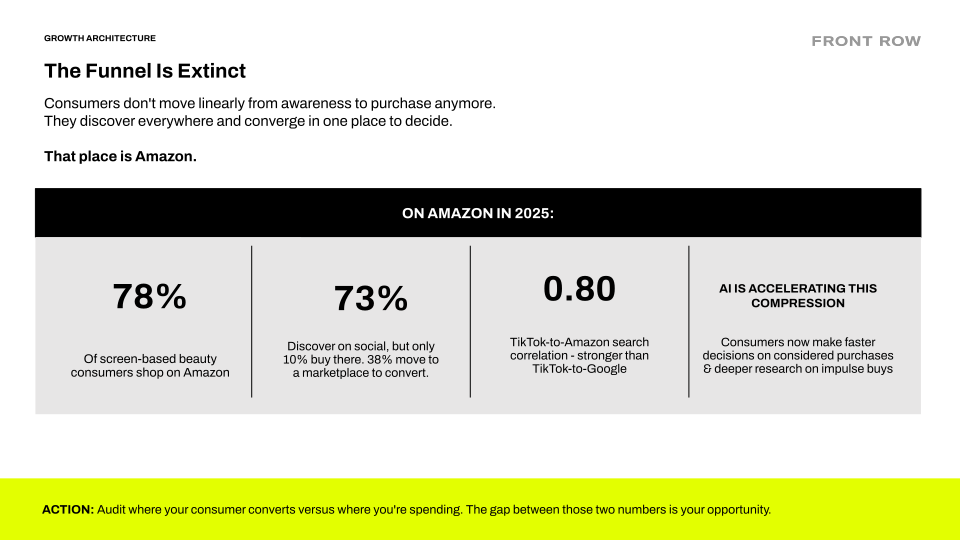
The work that drives Amazon outperformance mostly happens somewhere else. Forty percent of Amazon branded searches are driven by off-Amazon media. Thirty-six percent of Amazon sales are influenced by off-platform ads, at a 2x ROAS. Seventy-eight percent of screen-based shoppers report buying on Amazon after seeing something on social first. The platform converts. Everything that makes it convert starts somewhere upstream.
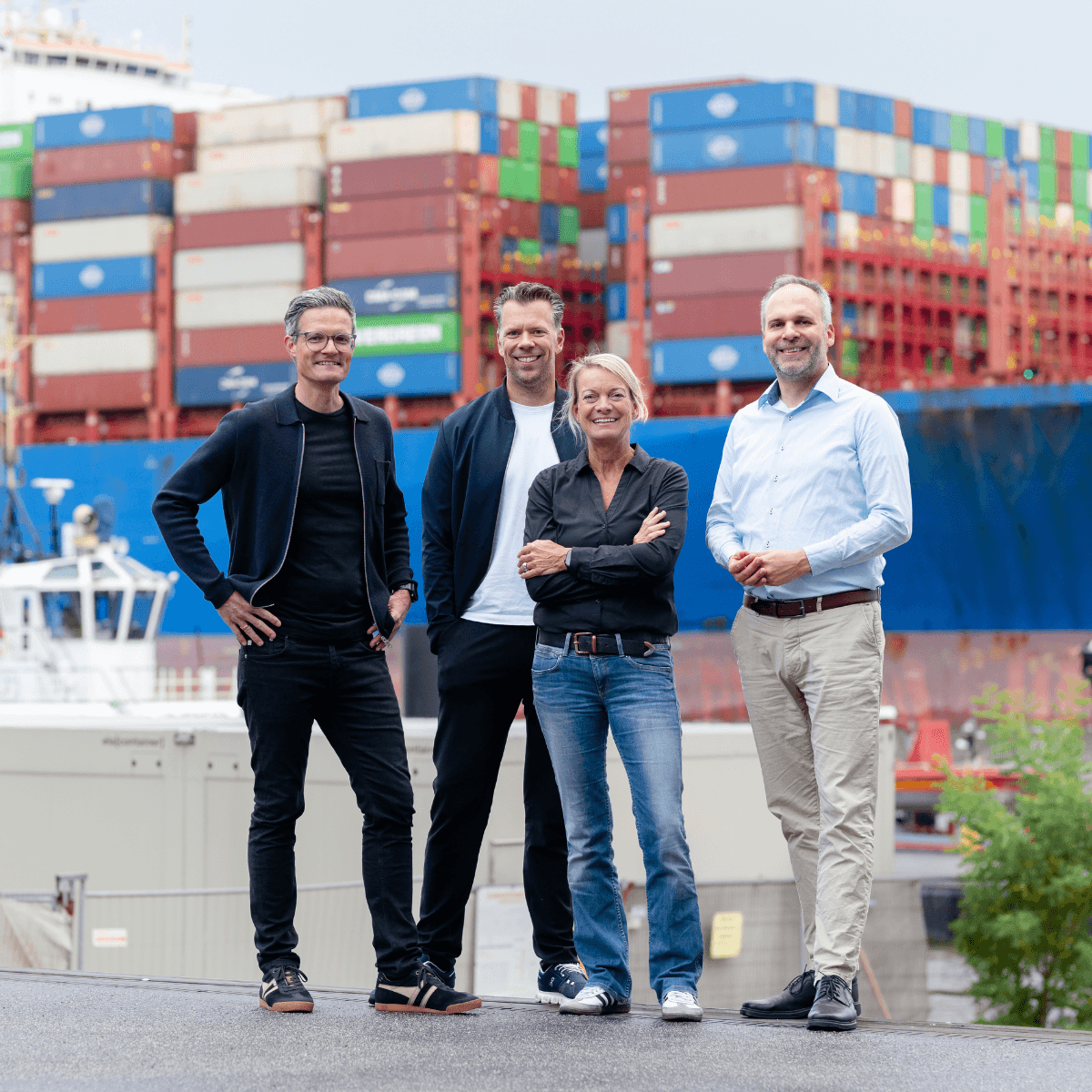
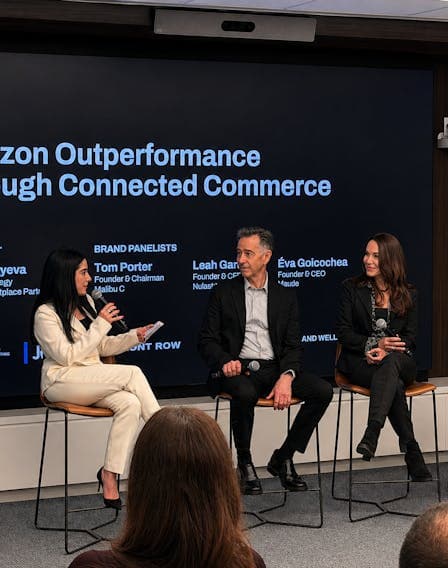
That was the throughline of "Amazon Outperformance Through Connected Commerce," the opening panel of the Beauty & Wellness Summit co-hosted by Jefferies, BCG, and Front Row. Rina Yashayeva, SVP of Brand Strategy at Front Row, moderated a conversation with Tom Porter of Malibu C, Leah Garcia of Nulastin, and Éva Goicochea of Maude, three founders who arrived at Amazon from completely different directions and arrived at the same conclusion: the platform rewards what you build outside of it. Because the demand a brand builds, protects, and signals upstream is what makes the marketplace convert.
Each founder came to Amazon differently, and that turned out to be the point.
Tom Porter, Founder and Chairman of Malibu C, didn't choose Amazon, Amazon chose him. In 2015, Porter discovered his professional hair treatments were already on the platform, being sold by third-party sellers at prices that undercut his own distribution network. He had no storefront, no strategy, no control. What he had was a problem.
"I put GPS devices in palettes to track where my leak was coming from. We ended up with over 150 third-party sellers."
What followed was a negotiation with Amazon that Porter describes as a turning point. Once he was in control of his own presence on the platform, the channel transformed. "From that day forward," he said, "it was a completely different ride. Front Row taught us how to work with Amazon instead of doing it all by yourself."
Leah Garcia, Founder and CEO of Nulastin, took a more deliberate path. She came from D2C and the infomercial world, and Amazon wasn't her native language. She spent time with other agencies before deciding she was ready. "You plan for your A game," she said. The implication being: she waited until she had the foundation to do it right.
Éva Goicochea, CEO and Founder of Maude, had a different problem entirely. Maude operates in sexual wellness, a category that faces ad restrictions and search suppressions across most platforms. Sitting out Amazon wasn't a brand posture she could afford. The consumers were already there, searching for a category that had historically failed them.
"It would be a disservice to not show up at all. Maude wasn't built to be afraid."
What Maude's Amazon data revealed was the kind of signal that makes investors sit up straight. Seventy percent of consumers shopping for Maude on Amazon are new to the brand, a figure Goicochea noted sits well above the category average. The platform isn't cannibalizing her D2C customer. It's finding someone new entirely.
The growth rate tells the same story. Maude posted 40% growth on Amazon in the past year. But Goicochea was careful about what she credited. The lift, she argued, comes from the halo. Maude has built substantial content and PR presence, and that content is largely PG. Consumers encounter the brand everywhere they're allowed to see it, then go to Amazon to actually buy it.
"If you're not on Amazon, we don't want to write about you." That line landed the way it was meant to. She was paraphrasing the media ecosystem's quiet ultimatum to brands in her category. Press coverage now functions partly as an Amazon demand driver, whether brands acknowledge it or not.

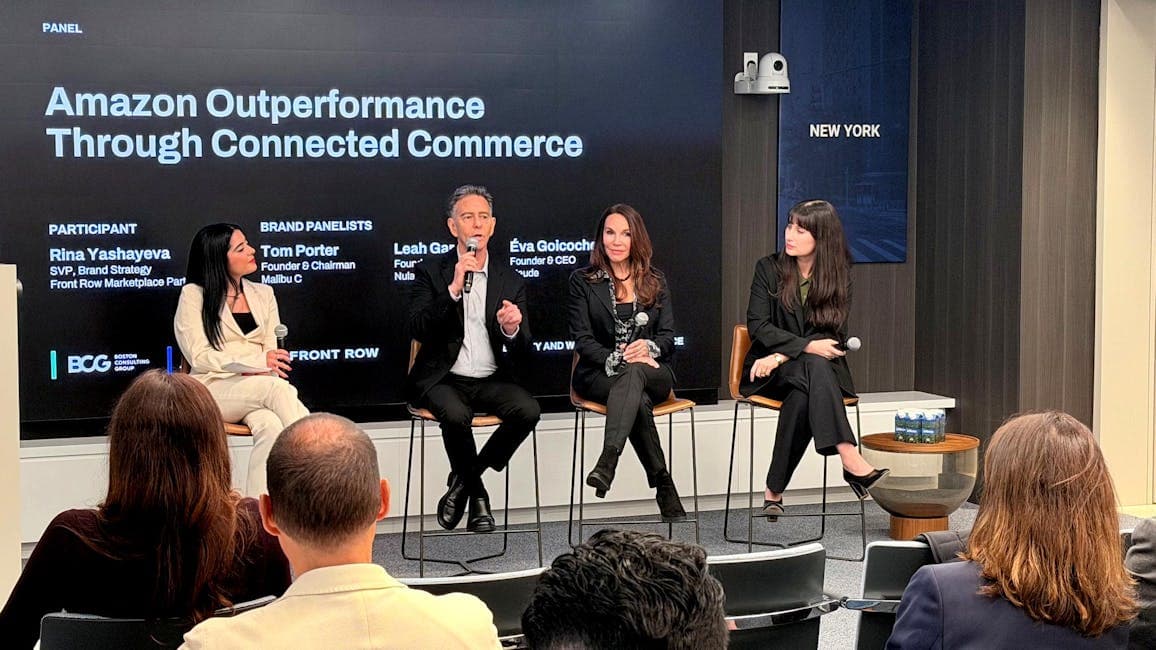
"From that day forward," he said, "it was a completely different ride. Front Row taught us how to work with Amazon instead of doing it all by yourself." - Tom Porter, Founder and Chairman of Malibu C
Front Row's 2025 performance data makes the case structurally. Brands in the portfolio outpaced Amazon category averages by roughly double across every vertical: 41% versus 24% in Health & Wellness, 38% versus 20% in CPG, 24% versus 19% in Beauty. The mechanism is connected commerce, off-platform demand feeding on-platform conversion, brand signals arriving warm at the moment of purchase.
Yashayeva noted that affiliate capabilities are currently among Front Row's fastest-growing offerings, a direct reflection of what Malibu C discovered organically and what Maude engineered deliberately. The off-platform work is the key that makes marketplace execution work. The founders on stage built their brands before the playbook existed. What they described, taken together, is the playbook.
If you’re interested in learning how Front Row helps brands connect the entire system through Amazon and off-channel execution, connect with us here.