

Joybuy Launched in Germany: Why That Might Affect Your Amazon Business
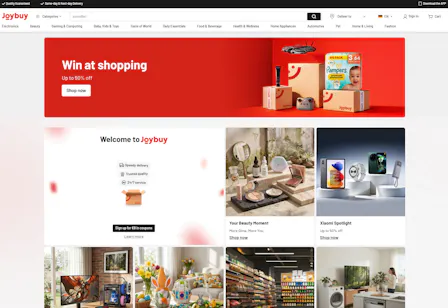
Joybuy, JD.com’s European online platform, officially launched in Germany last week after a multi-month test phase. It is positioning itself as an Amazon alternative with fast delivery, competitive pricing, and a curated assortment of known brands, not an open bazaar of no-name products. Reports put the initial assortment at around 60,000 items, spanning categories like electronics, household, drugstore, beauty, and groceries.
The question for brands on Amazon is not “should we panic?”, but rather, “what should we monitor now so we are not forced into bad decisions later?”
What Do We Know About Joybuy?
What we can observe today: Joybuy is live in Germany and is currently not an open marketplace. It's a curated model where Joybuy controls the assortment and retail offer, rather than a platform where any third-party seller can self-register.
Joybuy is also leaning hard into logistics: same-day delivery is available in parts of North Rhine-Westphalia under its “Double 11” express promise. Order before 11:00 and meet a €29 minimum order value, and delivery is targeted by 23:00 the same day. Order later in the day and delivery is targeted by 15:00 the next day. Outside those zones, delivery is handled via standard carriers such as DHL. Joybuy also operates with a visible last-mile fleet of around 100 vehicles at launch and runs logistics from Oberhausen, alongside a broader European footprint of 60+ logistics sites.
What still needs validation: the exact supplier mix behind every SKU (direct manufacturer contracts vs wholesalers), and what brand-level governance tools will exist if Joybuy later opens onboarding beyond its current model. One hypothesis worth pressure-testing is whether JD.com’s Ceconomy acquisition, the group behind MediaMarkt and Saturn, influences how Joybuy sources and prices IT and electronics inventory.
So, it’s better to treat Joybuy as real, but document assumptions and validate them before committing resources.
Amazon is Already Price-Matching Joybuy
We already see price matching behavior between Joybuy and Amazon, and that might be risky. If Joybuy undercuts, Amazon can respond in ways that hit brands differently:
- Vendors: pressure for additional funding or lower costs to protect Amazon’s margin.
- Sellers: Buy Box risk if your Amazon offer is higher than the market reference.
Even one aggressive discount cycle can distort Amazon Net PPM and force reactive negotiations. So, your first Joybuy “launch plan” should at least be a pricing and margin protection plan.
Treat Joybuy As a Distribution and Pricing Signal
Joybuy’s model makes it plausible that products can be offered via different supply routes, including wholesalers and resellers. That means your products may appear there even without a direct relationship. That is not unique to Joybuy, but a new, heavily promoted retail offer can amplify it through discounts and visibility.
If you do not control where stock is sourced and at what price it is resold, you do not control downstream price perception. For that reason, it’s smart to map where Joybuy could be sourcing your SKUs and tighten distribution guardrails where feasible.
No Hype-Driven Launch, But a Grounded Plan
Next 30 days
- Audit Joybuy for your top SKUs, bundles, and brand store presence.
- Track price, availability, delivery promise, and content quality versus Amazon.
Next 60 days
- Set escalation rules: when does Joybuy pricing trigger Amazon actions, and who owns the response.
- Align internally on minimum margin thresholds and negotiation red lines.
Next 90 days
- If Joybuy expands its model beyond today’s curated approach, decide if you want a controlled test, or if monitoring remains the smarter move.
So, the takeaway is: be ready to move fast, but do not spend like it is proven demand.
Mistakes to Avoid with Joybuy
To wrap things up, here are a few common patterns to avoid:
- Treating Joybuy as “just another Temu” and ignoring it
- Over-investing before demand, data access, and operating rules are clear
- Not monitoring Joybuy prices until Amazon margin pressure shows up
- Assuming your brand is not listed because you did not authorize it
- Letting content be copied or misrepresented without a governance process
Remember: the cost of basic monitoring is low, but the cost of late reaction can be high.
What to Do Next?
Joybuy looks like a credible European play: a curated brand assortment, a serious logistics setup, and a parent company with scale. It may or may not become a major channel, but it can still affect your Amazon economics through price pressure.
Your next best action is simple: set up Joybuy price and assortment monitoring now, then decide on any commercial move only once you see traction and rules you can operate under.
Want a fast Joybuy impact check for your Amazon business? We can review your top SKUs, identify pricing risk, and define escalation rules for Vendor or Seller teams.