Prime Day 2026 is now behind us. Early Amazon figures put European sales down 2% versus 2025, with the UK up 3%. Overall, Europe lands close to last year's performance, holding steady rather than repeating last year's growth.
The US followed a different trajectory. Online retail spend during the event grew 9.3% year over year to $26.4 billion, with the first day of Prime Day alone generating $8.3 billion and becoming the biggest online shopping day of 2026 in the US. Discounts stayed close to 2025 levels, which means the US growth came from more people buying and buying bigger, not from deeper discounts.
Part of that difference comes down to calendar timing. Amazon's US event overlapped with Memorial Day, the FIFA World Cup, Father's Day, and America's 250th anniversary, a cluster of shopping moments that Europe simply does not have on the same scale.
Weather Decided Winners in Prime Day 2026
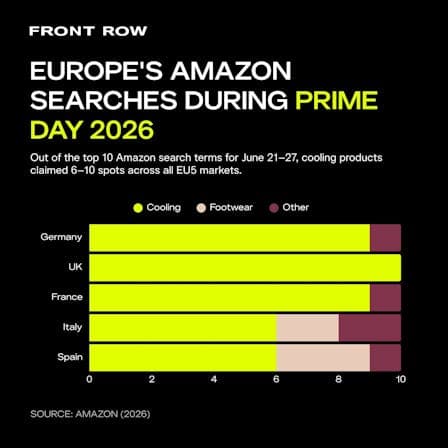
A heat wave across Europe ran alongside Prime Day and shaped which categories moved. Fans, ice cream makers, slushie machines, and insect repellents sold well, where the heat wave and Prime Day landed together. Summer kitchen appliances pulled up the whole kitchen category even as other kitchen products lagged.
The US saw a parallel pattern with different drivers. Electronics, appliances, tools, home improvement, and home and garden led US sales, and the share of the most expensive products purchased grew 19% versus average 2026 levels, with premium electronics purchases up 51%.
A Late Sales Spike Broke the Old Budget Model
Most teams plan deal-event budgets with a simple curve: spend heavily on day one, taper through the middle, expect a small bump at the close. US data backs up the day-one strength part of that curve, with $8.3 billion in US sales on day one alone, a 5.3% jump over last year's opening day and the single biggest shopping day of 2026 in the US.
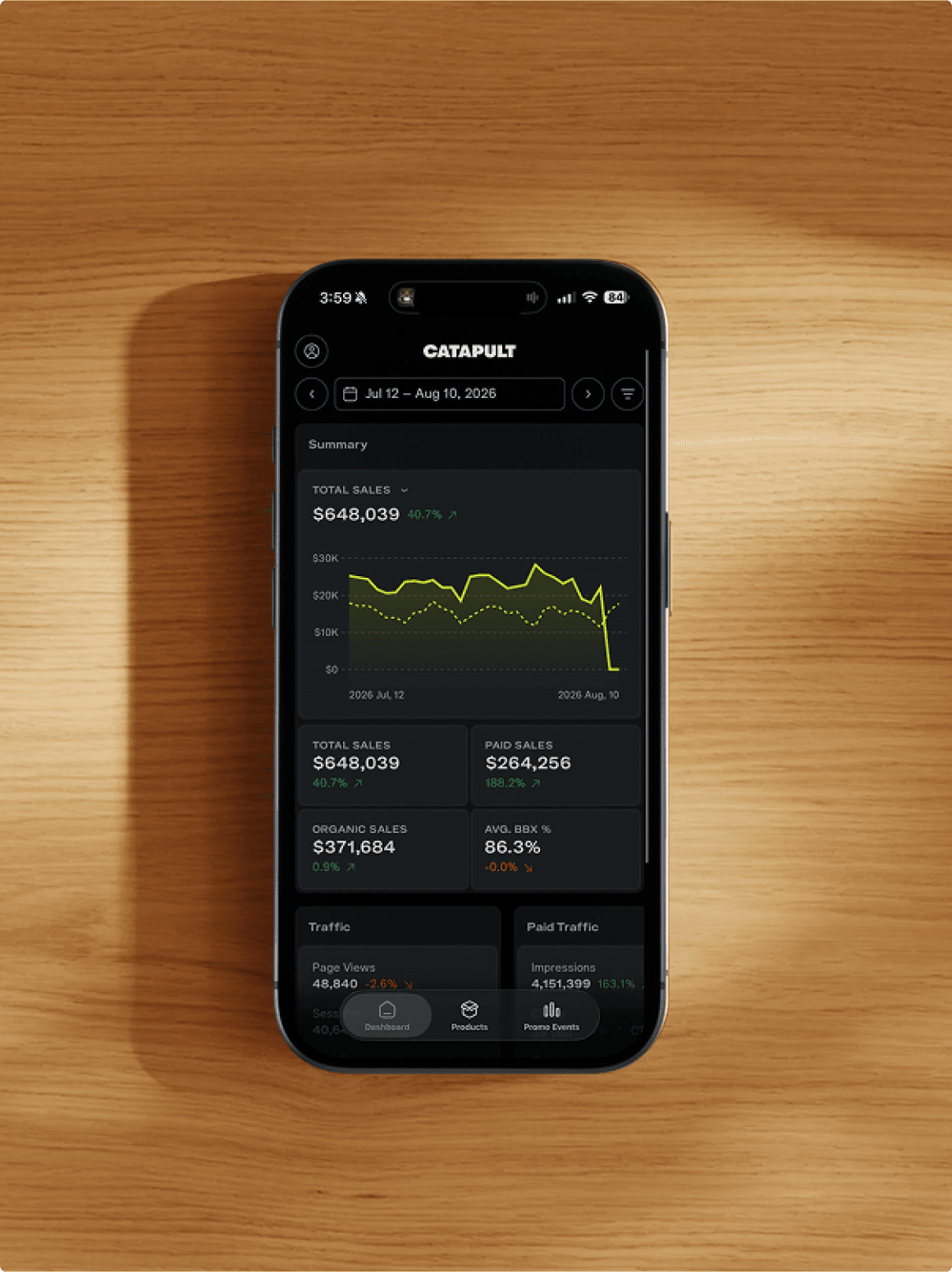
Hourly data from our own CATAPULT real-time sales reporting shows the same day-one strength in Europe, alongside something sharper: sold units spike hardest in the final two to three hours of day four, outselling every other point in the event. On the surface, that spike looks like the moment to push spend.
The CPC and ROAS data say otherwise. Competitors ease off on days two and three, waiting for the opening and closing days to spend hardest. That gap drops cost per click and lifts ROAS to its highest point of the whole event right in the middle, when everyone else has gone quiet. Glance views back this up: by the final hours of day four, product page visits have already flattened out. Shoppers aren't browsing anymore, they're converting on decisions made earlier in the event.
Takeaway here is to treat the last-hour spike as a signal of decisions made earlier, and put your media budget where competition is lowest, the quiet middle days, rather than chasing the visible spike at the end.
Avoid the Mistakes That Cost Brands Sales This Prime Day
- Cutting spend on the middle days based on a budget curve that no longer matches how shoppers behave
- Reading same-day sales numbers without accounting for the click-to-purchase lag
- Running out of deal funding before the highest-value hours
- Choosing category priorities from last year's bestsellers instead of real-time demand signals
- Waiting until Prime Day starts to build purchase intent
That last point matters more each year. Our team saw skincare brands run social ads well before Prime Day started, driving shoppers to add products to their Amazon carts early. By the time the deal dropped, the buying decision was already made, so Amazon simply processed the checkout. No Sponsored Products spend, no bidding against competitors for the same keyword.
Start Your 2027 Planning with Your Own Hourly Data
Prime Day 2026 grew sharply in the US and held flat in Europe, and both outcomes trace back to timing. US growth rode a stacked promotional calendar and a shopper base trading up on big purchases. European performance rode a late, weather-driven surge. Either way, the event rewarded teams who read hourly behavior over teams who followed last year's plan.
Your next step is to pull your own hourly sales and click data from this Prime Day and check it against the categories and timing patterns above before Q4 planning starts.
Talk to our team about building your budget plan for the next deal event.