UNAUTHORIZED RESELLERS ARE ERODING YOUR AMAZON REVENUE. HERE’S HOW TO STOP THEM.
Unauthorized resellers used to feel like a nuisance; a minor operational headache that brand teams dealt with reactively. That era is over. Today, gray-market sellers on Amazon represent a structural threat to revenue, pricing power, and brand equity, and the problem is accelerating fastest in beauty, wellness, and supplements. According to Brand Alignment, unauthorized third-party sellers now account for a majority of marketplace listings in many consumer categories, and the damage they cause is being felt in brand revenue right now.
What started as a pricing inconvenience has become something harder to ignore: a material threat to revenue, trust, and long-term pricing power. When a product is copied, diverted, or sold by an unauthorized reseller, the damage extends well beyond the missed transaction. The brand loses control of the customer journey. The listing experience becomes inconsistent. The signal to the market gets muddy, fast.
That is the real shift brand leaders need to internalize: winning on Amazon today requires a defensive strategy, not just a growth strategy. You cannot scale media, content, or conversion if the foundation beneath it is leaking. If your Buy Box is contested and your listings are vulnerable, every dollar you spend driving demand is working against a system you do not fully control. The problem is competition and erosion.
Two Ways Resellers Infiltrate Your Listings. Both Are a Problem.
Unauthorized seller activity shows up in two forms, and brands tend to underestimate both. The first is the gray-market reseller who sources your product through diverted inventory, liquidation channels, or expired distributor agreements, then lists it at a price that undercuts your authorized channel. The second is the outright counterfeit operator: someone selling a product that mimics your packaging and claims but has no connection to your supply chain whatsoever. Both attach to your listings. Both win your Buy Box. And both deliver a fractured experience under your brand name.
Amazon is a trust engine disguised as a marketplace. The Buy Box is where that trust is either reinforced or broken. Up to89% of Amazon sales flow through the Buy Box according to Brand Alignment, which means when an unauthorized seller wins it, the brand is no longer the first point of truth for the shopper. Revenue shifts. And the customer who receives expired, mishandled, or off-spec product does not blame the gray-market reseller. They blame the brand.
Losing Control Is a Compounding Problem
When brands lose control of their listings, they lose more than one sale. Pricing becomes inconsistent. Inventory quality becomes unpredictable. Brand perception quietly deteriorates. The shopper does not always know why the experience feels off but they notice. A listing with erratic pricing or unstable availability stops feeling premium, trustworthy, or worth returning to.
That instability compounds. Paid media becomes less efficient because traffic lands on a weak foundation. Sponsored Products ads are tied to Buy Box ownership, so if a rogue seller wins the box, your ads may stop serving entirely, meaning you are paying to generate demand that flows to someone else. Amazon’s algorithm, meanwhile, responds to conversion instability with lower organic rank. The channel stops working for you. And the downstream effect on authorized retail partners, who start protecting themselves with more aggressive pricing and less commitment, can be just as damaging.
Defensive Strategy Is a Growth Lever
Brand protection is the foundational infrastructure for Amazon performance. The strongest brands are treating protection as part of their growth stack. In practice, that means building a Buy Box ownership strategy, enforcing authorized seller policies, monitoring pricing behavior across channels, and using programs like Amazon Transparency to lock down product integrity at the ASIN level.
Transparency does not solve every marketplace problem, but it raises the cost of operating without authorization, making it harder for counterfeiters and gray-market sellers to attach to your listings. Once the listing is stable, everything else performs better. Paid media converts more cleanly. Organic rank stabilizes. The brand can actually trust the demand signal it is generating. Protection is a key component of what makes growth possible.
Case in Point: Microbiome Labs
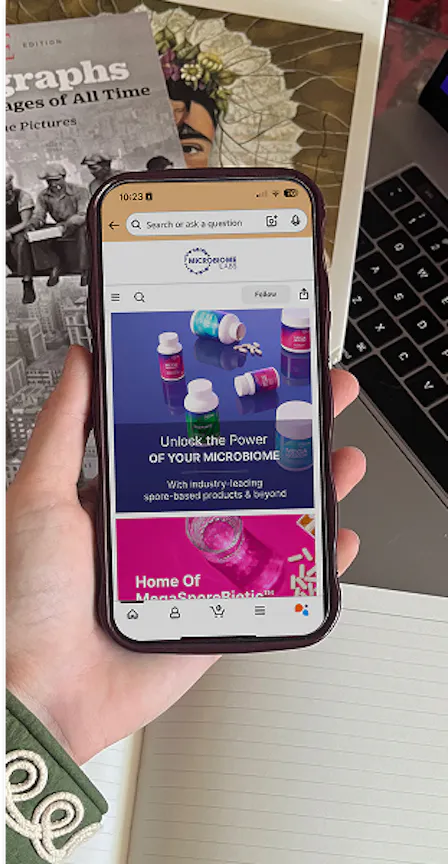
Microbiome Labs is a clear example of what it looks like when a brand takes back control. The brand was facing unauthorized resellers across its top ASINs, and Buy Box ownership had eroded to around 55%. The estimated revenue impact: $2.8M in lost sales in 2024 alone. More than a revenue leak, it was a trust leak. Customers were encountering a shopping experience that no longer reflected the brand’s standards.
The turning point came with enrollment in Amazon’s Transparency Program, combined with full operational coordination and enforcement. Front Row helped the brand navigate onboarding, work through Amazon’s requirements, and restore control over its top-performing SKUs. The results:
- Buy Box ownership climbed back to roughly 90% and above.
- The 60-count SKU saw sales rise from 63% to 95%.
- The 180-count SKU climbed from 64.85% to 88.79%.
- Sales followed: gains of 36% and 162% respectively.
The important takeaway is once control was restored, the marketing motion changed. The brand could move from defense to offense, using paid media and SEO more effectively because the underlying Amazon experience was finally stable.
With Buy Box ownership and product integrity back in place, the rest of the Amazon engine starts working harder. Media becomes efficient because shoppers are landing on listings they can actually purchase from. Conversion steadies. Organic growth strengthens. The channel stops fighting internal friction and starts compounding toward it.

The Brands That Win Will Control Their Ecosystem
Unauthorized reseller activity is not going away. If anything, it is becoming more sophisticated as Amazon’s marketplace rewards speed and volume. The brands that win will be the ones that act early, invest in protection infrastructure, and treat Amazon as a controlled channel rather than an open one.
That means building systems that monitor seller behavior, enforce authorized distribution, and protect pricing integrity before problems become visible in revenue. The biggest risk is not losing a single sale to a reseller. It is losing control of your own demand. Once that happens, growth gets expensive fast.
Defense is the new offense. At Front Row, our team helps beauty, health, and wellness brands protect their Amazon ecosystem so growth can actually compound.
Reach out at frontrowgroup.com/contact to start the conversation.