
When a brand greenlights a new flagship concept, the mid-construction phase often reveals a stark reality: digital listings, third-party retail environments, and the core website remain tethered to an outdated identity. While these overhauls do not create brand fragmentation, they act as a spotlight, exposing critical gaps in narrative and visual cohesion.
However, rather than viewing this exposure as a setback, organizations should embrace the overhaul as a strategic catalyst for synchronizing the brand ecosystem and deepening consumer connection.
Most brands accumulate touchpoint drift quietly: 95% of companies have brand guidelines, but only 25-30% actively enforce them across the organization, which is exactly the gap that becomes visible the moment one channel gets rebuilt and the rest don't match. That's a wide gap between the document and the discipline, and it's exactly the gap a overhaul exposes. A brand can nail the fixture system and the color story in a new store and still have a digital shelf, a social feed, and a retail partner deck that reads like three different companies.
What consistency is actually worth
The Lucidpress/Marq State of Brand Consistency research, one of the more methodologically grounded studies in this space, found that presenting a brand consistently across platforms is associated with a 10 to 20% increase in overall revenue on average, with strong cases reaching as high as 33%. Consumer expectations back this up from the other direction: roughly 90% of shoppers now expect a seamless brand experience across every channel they touch.
That's the case for treating a overhaul as more than a design project. The budget, the internal attention, and the executive buy-in are already there for one channel. Extending that same discipline to every other touchpoint costs a fraction of what it costs to build the overhaul in the first place, and it's sitting on real revenue if a brand actually does it.
The digital shelf is the same fight, different outfit
Physical retail isn't the only place this plays out. The digital shelf has become a brand experience layer in its own right, where tone, imagery, and visual consistency across product pages shape how a shopper perceives a brand the same way a store does. And the two aren't as separate as they used to be. Shoppers standing in a store still pull out their phones mid-decision to check reviews, compare specs, or confirm they're looking at the right product. If the digital shelf doesn't match the store they're standing in, the brand undercuts its own overhaul in real time.
A store redesign and a digital shelf cleanup are the same problem wearing two different outfits. Treating them separately means solving the same issue twice, on two different timelines, at two different levels of polish.
What this looks like when a brand gets it right
Sol de Janeiro's brand had evolved, but its retail presence hadn't caught up. Department store doors wanted spectacle, including shelf discipline and a fixed footprint. Travel retail wanted speed. Left alone, those pressures pull a brand in three directions until it ends up with disconnected identities wearing the same logo.
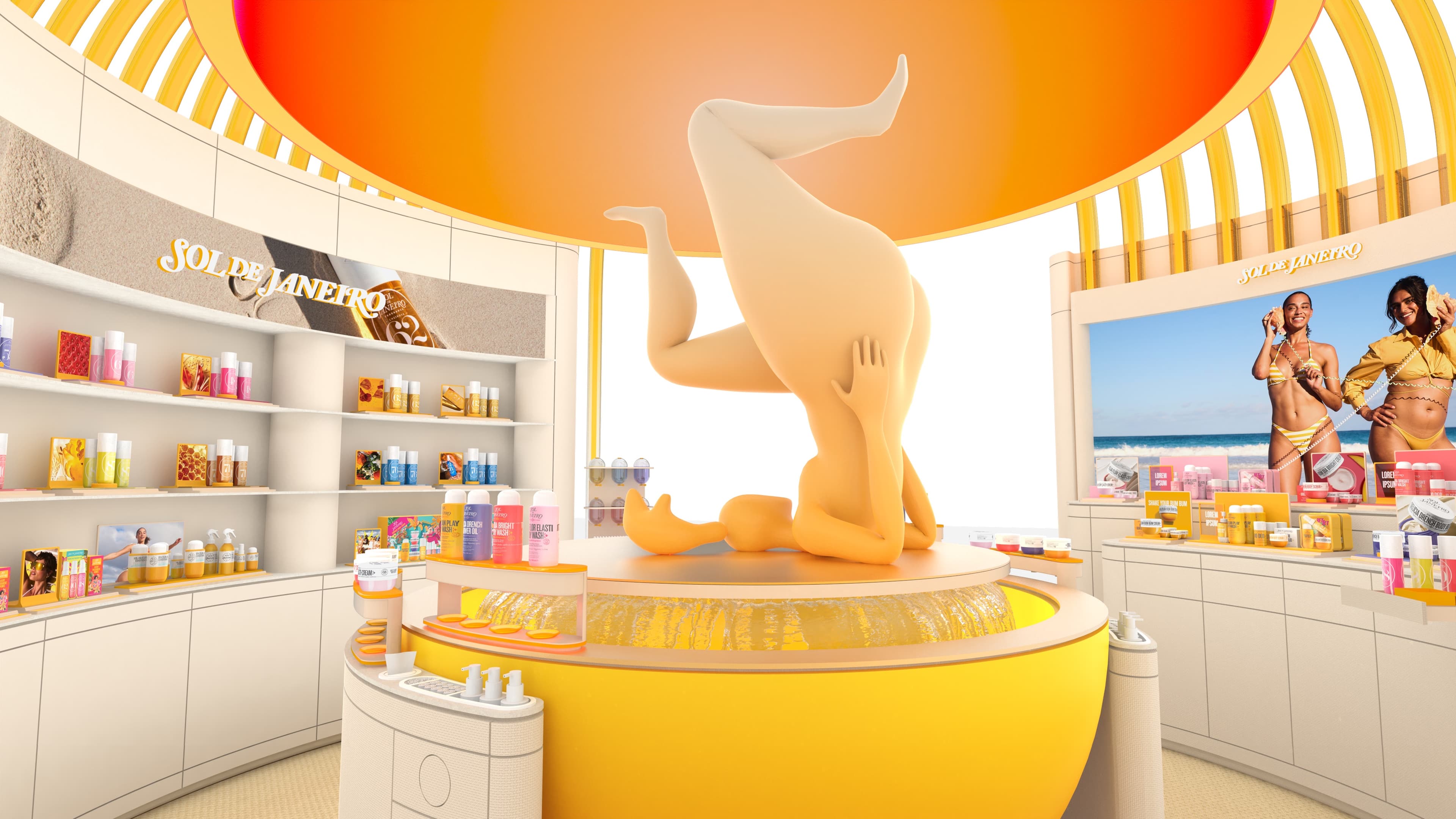
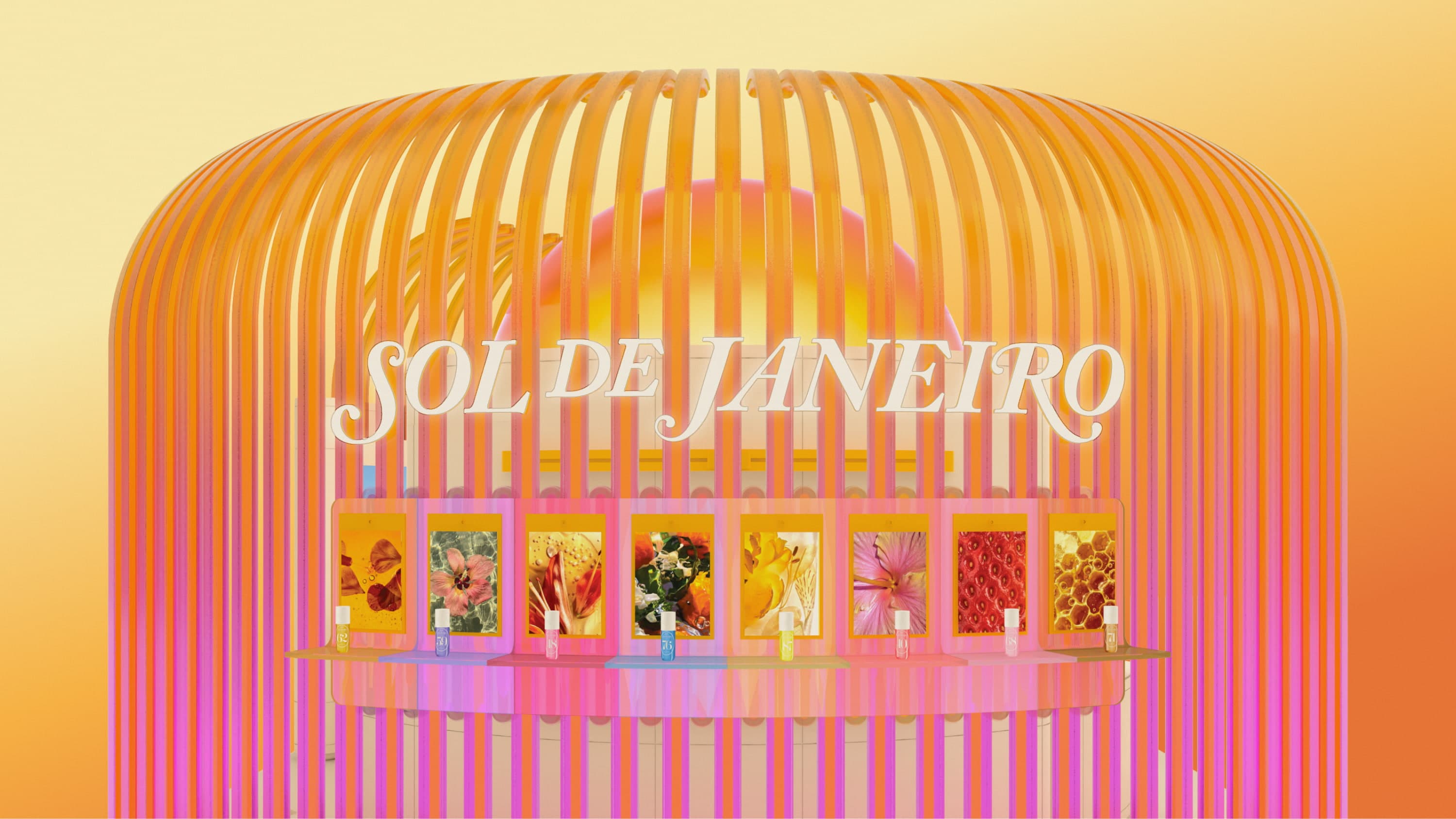
Front Row developed a retail system centered on a single organizing principle: the sun. This "sol-core" framework established a consistent visual language that served as the connective tissue for every environment. By utilizing warm gradients, citrus-bright yellows and oranges, and sculptural forms like domes and sunbursts, the system remained unmistakably recognizable across diverse scales. Whether applied to a high-impact department store centerpiece, an elevated luxury counter, a high-velocity travel retail fixture, or a modular shelf-ready footprint, the "sol-core" DNA allowed the brand to maintain its identity while seamlessly adapting to the unique operational requirements and constraints of different retail formats.
The deliverable that made it repeatable was a Global Retail Sourcebook, a single reference that lets Sol de Janeiro deploy a consistent, unmistakably "beach energy" presence in any market, on any format, without reinventing the brand door by door.
The overhaul is the opening, not the obligation
The store gets rebuilt once. The brand it's supposed to represent gets seen everywhere, every day, on channels nobody thought to touch when the overhaul budget got approved. The overhaul is just the one moment those two things are finally forced to agree with each other. The brands that get the most out of it are the ones who used the excuse to fix everything else while they had the attention to do it.
See how we build systems like this in our Retail & VM Design capability.