
YOUR AMAZON PROBLEM ISN'T ON AMAZON: KEY TAKEAWAYS FROM CHRIS SKINNER'S WWD CEO SUMMIT KEYNOTE
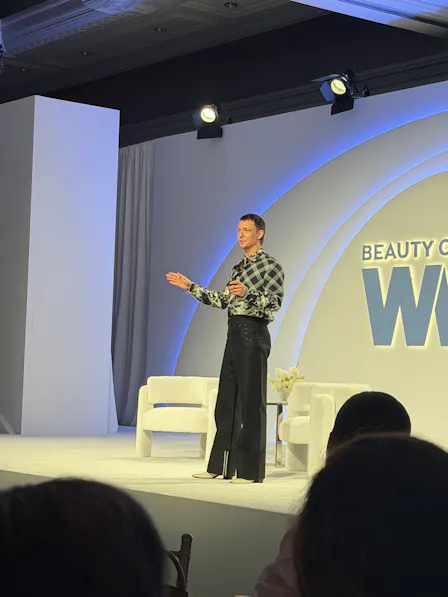
At the WWD CEO Summit in Palm Beach, Front Row Co-Founder and CRO Christopher Skinner opened not with a market forecast or a case study, but with a garden.
His partner gave him one for his birthday. And over the course of learning to tend it, he noticed something: when the plants weren't thriving, the instinct was to check the bed. The soil. The roots. But the real problem was upstream. A leak in the pipe. Water lost at every junction before it ever reached anything living.
It's a quiet image for a loud problem, and it set the thesis for everything that followed.
The Numbers That Should Bother You
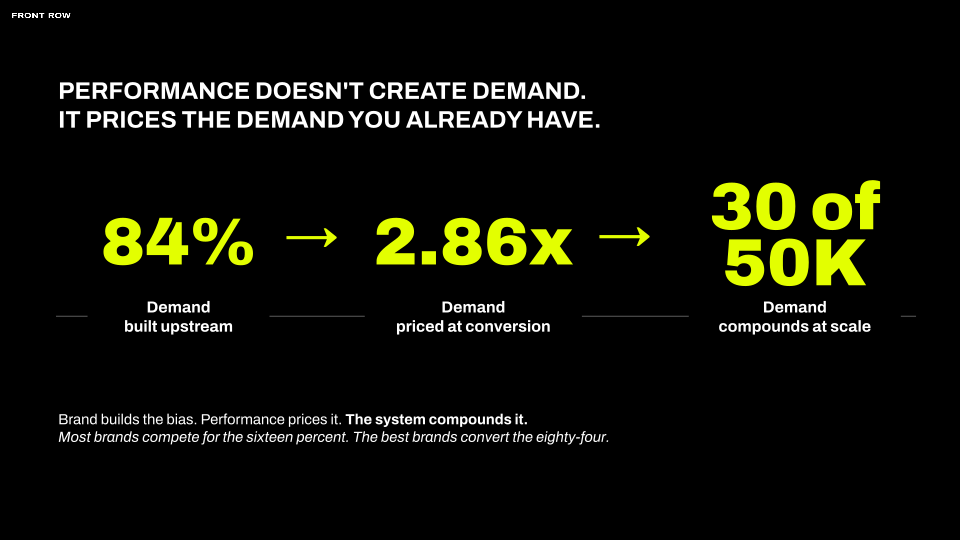
Out of 50,000 beauty brands competing on Amazon, only 30 have crossed $100 million in annual revenue. One in 1,500. The top 0.07%.
That's not a marketplace problem. It's a brand problem masquerading as one.
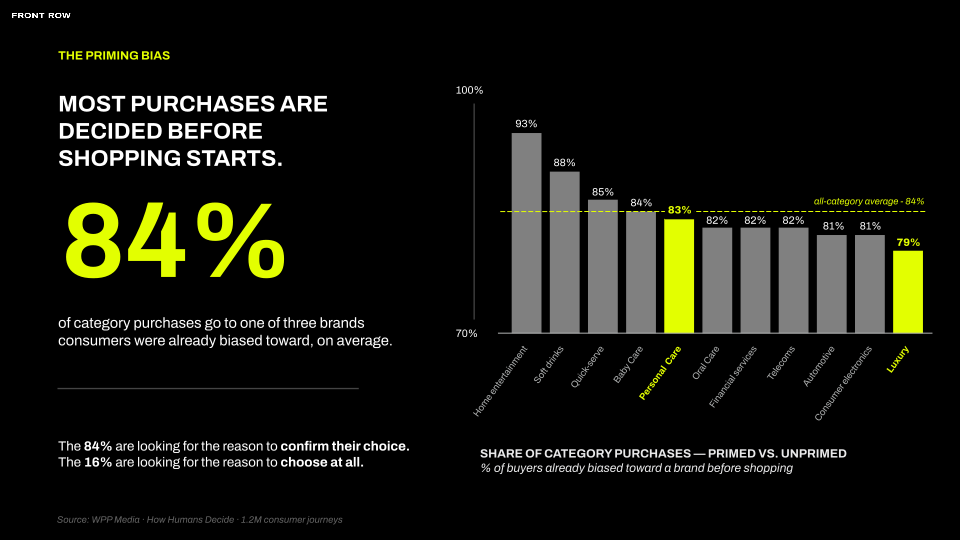
Skinner's argument, backed by Front Row analysis via Perpetua Prism and research from WPP Media's How Humans Decide, is that most brands are fighting for the wrong customers. Eighty-four percent of category purchases on Amazon go to brands the consumer already had in mind before they opened the app. They arrived wanting. The platform just confirmed the choice.
The remaining 16% are genuinely undecided. Most brands are spending the majority of their budgets trying to win them.
Performance Doesn't Create Demand. It Prices It.
This is the central claim, and it's worth sitting with: performance marketing doesn't generate desire. It converts desire that already exists. The brands that understand this build demand first, off-channel, through brand clarity, creator content, cultural narrative, and earned presence, and then let Amazon harvest what they've grown.
The data bears it out. Across 5,779 beauty brands analyzed by Front Row, a single variable predicted next year's growth better than any other: search pressure, meaning branded searches per product. High search pressure correlated with 27% CAGR. Everyone else averaged 6%. The brands people are searching for before they buy are the brands Amazon rewards.
And the multiplier effect is real. Brands with higher awareness convert performance spend at 2.86x the rate of low-awareness competitors, on identical investment. Same dollar. Same click. Radically different outcome.
The Efficient Ceiling
There's a structural cap on what paid media alone can do. Around 25% TACoS, returns flatten. Paid can account for roughly 60-65% of total Amazon sales without growing branded search, and then it stalls. Skinner calls this the efficient ceiling, and it's where many brands find themselves running ads against a flat line, wondering why the engine isn't accelerating.
The brands that cross through it are the ones where brand demand overtakes paid. Where the consumer arrives wanting, repeat purchase compounds, and by year three, retained customers rival new acquisition in sales volume. That's the compounding shape. Conversion is the transaction. The compounding is the brand.
Medicube: A Case Study in Upstream Investment
Eighteen months ago, Medicube was near zero on Amazon. In Q1 2026, it was the number two beauty brand on the platform, with estimated sales of $108 million, up 217% year over year. A single SKU, the Zero Pore Pad, generated $17.8 million in one quarter.
The mechanics behind it: K-beauty media, creator content, and cultural narrative built demand off-channel. Tentpole timing, promotional depth, and sharp execution converted it on-channel. Branded search explained roughly 80% of Amazon sales variance throughout the run. Neither side of the system was sufficient alone.
What Front Row Does Differently
Most agencies own one part of the system. Front Row, Skinner argued, operates the whole thing: brand building, content creation, demand generation, digital flagship innovation, and marketplace acceleration, unified under a single intelligence layer called Catapult, their proprietary platform built for marketplace outperformance.
The closing image returned to the garden. Same beds, same soil, same water. But tended through every season, by the same hands, with the same system. That's not a metaphor for patience. It's a model for compounding.