
YOUR AMAZON PRODUCT PAGE IS YOUR GROWTH ENGINE
There's a stubborn assumption that lives inside a lot of brand teams, and it goes something like this: Amazon is a utility. A shelf. A fulfillment layer. It doesn't need to be beautiful because it just needs to work.
That assumption is costing brands real money. And it becomes dangerous the moment a consumer leaves your D2C site and goes looking for you on Amazon.
The Validation Problem
Here's how a modern beauty or wellness purchase actually unfolds. A consumer discovers your brand through paid social, a creator post, a recommendation, or a moment of ambient awareness. They visit your website, they read the story, they absorb the aesthetic, and they feel something. Then they open Amazon.
This action doesn’t happen because they distrust your brand necessarily, but because Amazon is where they buy. It's where their Prime account lives, where their card is saved, where returns are effortless. A consumer may discover in-store, validate on Amazon, and purchase elsewhere, often all within the same journey. What happens at that checkpoint determines whether the sale closes or evaporates.
If your Amazon presence looks like an afterthought with stock images, generic bullets, a storefront that shares no visual DNA with the brand you just spent money building, the trust you earned upstream degrades. The shopper doesn't form a coherent opinion of you. When customers encounter your brand across a multi-channel ecosystem and recognize not just visual elements but consistent values and voice behind them, they develop the confidence to engage more deeply. But the inverse is also true: fragmented experiences create cognitive dissonance. And cognitive dissonance at the moment of purchase is a conversion killer.
Creative Is Not a Cosmetic Layer
This is where the misconception gets most expensive. Amazon creative, including your main images, your A+ content, your Brand Store, and your videos are treated by many teams as a box to check. What the data shows is something different entirely.
Basic A+ drives 5-10% conversion lifts, while premium A+ delivers 15-20% improvements, and both reduce return rates by 10-15%. According to Amazon's internal benchmarks, brands using A+ Content see conversion rates increase by up to 20%, driven by richer storytelling, better visual hierarchy, and more informative decision-making tools for customers.
For a product moving 500 units a month, a 15% lift is 75 additional sales without no new ad spend, and no new audience. Listings with embedded video content convert at 3.6 times the rate of static-image-only listings. Sponsored Brands Video drives a click-through rate 2.6x higher than static ads and a conversion rate 13% higher than image-based ads. And yet most brands still treat video as a nice-to-have.
In 2025 consumer research, 77% of shoppers said product images and videos are "very" or "extremely important" when deciding to complete a purchase. That same research found that 56% of users' first action on a product page is exploring images. Before the title. Before the bullets. Before the price.

Amazon Converts When You Give It Something to Work With
Amazon's baseline conversion rate is already exceptional compared to the broader web. Average conversion rates range from 9.87% to 11.1% across all product categories, representing approximately 7x higher conversion efficiency than non-Amazon platforms. The intent is already there. Shoppers who land on your listing came to buy something. The only question is whether they buy yours. That's the opportunity brands keep leaving on the table. The traffic quality is high. The creative isn't matching it.
You can run perfect campaigns upstream (demand gen, social, influencer, branded search) and watch conversion stalls because the listing doesn't carry the brand forward. The D2C experience builds desire and the Amazon page is where desire becomes a decision.
The D2C Flagship as the Source Document
The digital flagship is the canonical expression of your brand, or the place where your story, your aesthetic, and your point of view live in their most intentional form.
Amazon doesn't replace that, but it certainly has to reflect it. When the visual language, the tone, the benefit hierarchy, and the product narrative carry from your website into your Brand Store and your A+ content, the consumer experiences continuity. And continuity is trust in motion.
A+ Content should feel connected to your Brand Story section, product packaging, D2C website, and even ad creative. When everything tells a consistent story, the result is a stronger brand experience and higher trust.
That's the real work: not treating Amazon as a separate creative environment with its own logic, but as an extension of the brand architecture you've already built. The flagship gives you the brief. Amazon executes against it.

SCRUB DADDY: WHAT RECOGNITION LOOKS LIKE AT SCALE
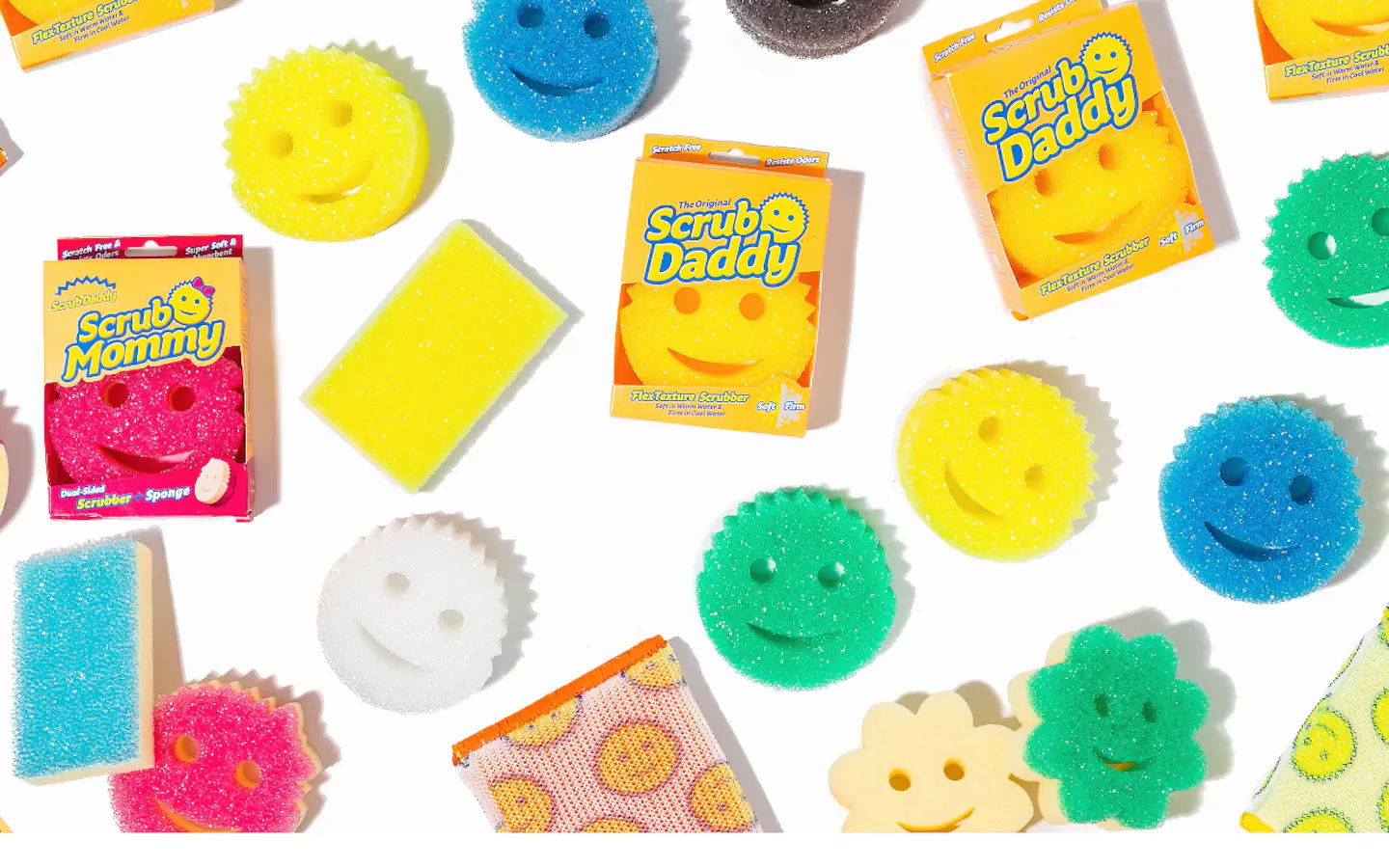
Few brands make the case more cleanly than Scrub Daddy. The smiley face has become a cultural artifact. You know it the moment you see it. That recognition, built over years of product development, retail presence, and an enormous amount of earned media, is the kind of brand equity that compounds on Amazon in ways that are hard to replicate through paid spend alone.
When Front Row partnered with Scrub Daddy, the strategic question wasn't whether the brand had equity because it clearly did. The question was whether Amazon was capturing it. Through assortment innovation, channel-specific content, and demand planning designed around Amazon's native logic, the results followed: a 24% increase in Amazon sales and a 23% increase in average order volume.
The lesson isn't "be Scrub Daddy." It's that the brands with the clearest visual identity and the most consistent storytelling are the ones whose Amazon presence can actually activate what upstream marketing built. The smiley face on an A+ module hits different when a consumer has seen it a hundred times and trusts what it stands for.
Strong brands convert faster, at higher AOV, with less persuasion required at the point of sale. Because the creative work has already done its job.
This Is the Connected Commerce Argument
Connected Commerce reflects the integration of discovery, validation, and conversion across channels. Consistency ensures that the brand experience builds trust, no matter where the consumer engages.
The product page is not the end of that conversation. In a lot of ways, it's where the conversation becomes real. Make it say something worth hearing!